%20(1).avif)
What Are Medical Billing Companies in West Virginia?
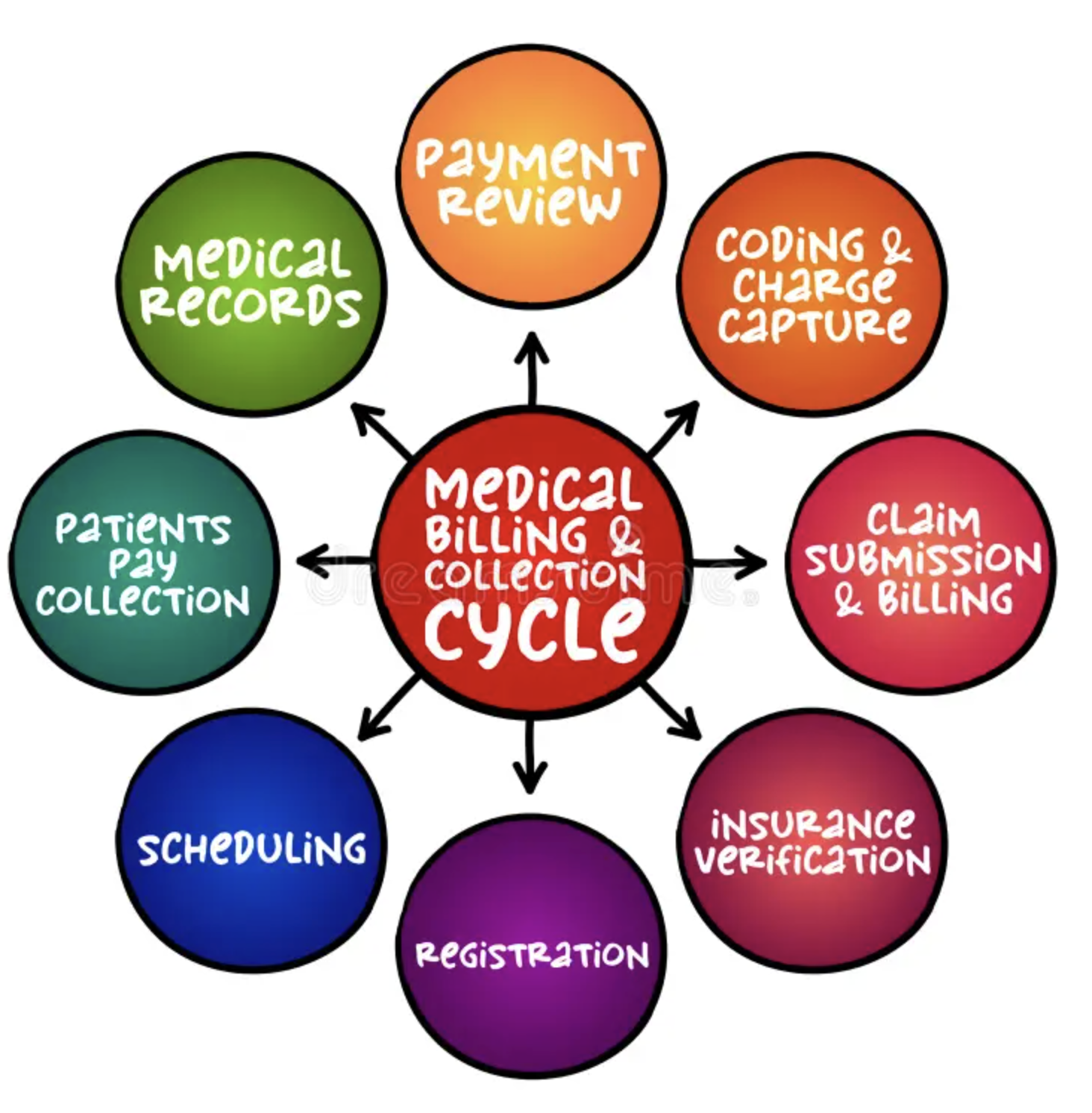
Medical billing companies in West Virginia manage claims, denials, payment follow-up, patient balances, and related revenue cycle work for medical practices. Under W. Va. Code 33-45-2 an insurer has 30 days to pay or deny a clean electronic claim and 40 days for a manual one, with interest at 10% a year accruing after day 40.
West Virginia Practices Are Losing Revenue in Places They Cannot See
West Virginia is one of the few states where a prior authorization approved by one payer is supposed to travel to the next one, and almost no practice here uses it. Since January 1, 2024, an approval issued by Medicaid or a commercial insurer carries over to every other managed care plan, health insurer and PEIA for three months when the service is delivered in state.
Most West Virginia practices request it again anyway. Not because the rule is obscure, but because the original approval was never filed anywhere a biller could find it three weeks later.
The same shape repeats through the rest of the file. Late payment interest starts on day 41 even when the claim was due on day 30. A retroactive denial expires after a year. An AR report shows you the balance, and never shows you which rule was sitting there unused.
Medical Billing Services for West Virginia Practices
Full-Service Medical Billing
Our full-service medical billing team manages the revenue cycle from eligibility through payment posting and zero balance. Your dedicated team works inside your existing practice management or EHR system instead of forcing you through a disruptive software migration.
Medical Coding
Our certified medical coders review documentation and apply the appropriate coding workflows for your specialty and payer mix. Better coding upstream can prevent avoidable denials downstream.
Denials and AR Recovery
Old accounts are often the fastest place to find recoverable revenue. Our denials and AR recovery service prioritizes aged accounts, identifies denial patterns, works payer responses, and pursues appropriate appeals and follow-up until the account reaches resolution. In West Virginia that includes checking every takeback against the one-year limit on retroactive denials in W. Va. Code 33-45-2 before anything is paid back.
Eligibility and Benefits Verification
Eligibility problems can create avoidable write-offs and patient-balance confusion. We verify coverage and benefits so your team has the information needed before claims and patient statements move forward. With four Mountain Health Trust plans, PEIA sitting alongside the commercial book, and only two carriers on the marketplace, West Virginia eligibility checks catch plan changes that would otherwise surface as denials months later.
Prior Authorization
Authorization requirements vary by payer, plan, service and specialty, and West Virginia gives you more to work with than most states. An approval carries over to other plans and PEIA for three months, and a provider clearing a 90% approval rate on a procedure they perform 30 or more times a year can be exempted from authorization on it. We run prior authorization workflows that track approvals and approval rates by CPT so both are actually claimable.
Patient Billing
Patient balances are part of the revenue cycle too. Our patient billing support keeps statements, balances, and follow-up organized so your practice is not leaving the final portion of earned revenue unattended.
Credentialing
Credentialing problems can delay payments before the first claim is ever submitted. We support provider enrollment and credentialing so practices stay operational with the plans they serve. West Virginia gives an insurer four months from a completed application to accept or reject a provider, extendable by three more, so we date-stamp every submission and hold plans to those dates.
RCM, CCM and Telehealth
Practices increasingly need billing workflows that account for multiple care models and remote services. We support revenue-cycle processes for RCM, chronic care management, and telehealth programs, with medical virtual assistant support where a practice needs front-office coverage alongside billing.
Dashboards and Automations
You should not need to wait for a monthly spreadsheet to understand what is happening to your revenue. We use reporting and workflow automation to make trends in AR, denials, collections, and billing performance easier to identify and act on.
How Our Medical Billing Process Works
1. Start With a Billing Review
We begin with a 30-minute review of your AR aging, denial patterns, payer mix, and current billing workflow. The goal is simple: identify what is actually costing you money and where we would start.
2. Build the Revenue Recovery Plan
We identify the accounts, payer issues, coding patterns, workflow gaps, and filing risks that deserve attention first. You get a clear view of what should be worked immediately and what needs a process change.
3. Start With the Oldest Money
Working aged AR comes first because it represents revenue you have already earned. Our team works the backlog while establishing a consistent process for new claims and daily billing.
4. Run the Full Cycle
Once the foundation is in place, we take over the agreed portion of the revenue cycle: eligibility, coding, submissions, payment posting, denials, appeals, AR follow-up, patient billing, and reporting.
5. Improve the System, Not Just the Claims
The goal is not to create a permanent cycle of denials and appeals. We look for repeatable patterns so the practice can prevent the same billing problems from occurring again.
Why West Virginia Practices Choose Luxen
20+ Years of Revenue Cycle Experience
Medical billing is not a process you learn from a checklist. Payer behavior, documentation, coding, authorization, and follow-up all require experience. Luxen brings more than two decades of experience to the revenue cycle.
Certified Coders
Coding quality affects everything downstream. Our billing operation includes certified coding expertise so claims are built with greater attention to documentation and payer requirements.
Your Existing EHR and Practice Management System
You do not have to replace the software your practice already uses. Luxen works within your existing system, including platforms such as athenahealth, DrChrono, ModMed, AdvancedMD, NextGen, eClinicalWorks, Meditab, OpenDental, and other systems.
A Named Team, Not a Random Support Queue
You should know who is responsible for your claims. Our model is built around dedicated people working inside your systems and learning the way your practice operates.
HIPAA-Compliant Workflows
Before accessing protected health information, we sign a business associate agreement, and healthcare engagements operate through HIPAA-compliant tooling.
AAPC, AHIMA and SOC 2
Luxen combines billing expertise with professional credentials and documented security and compliance standards, including AAPC and AHIMA expertise, HIPAA-compliant workflows, and SOC 2.
We Read the Numbers Before We Quote
We do not want to sell you a generic percentage based on a generic practice. We look at your AR aging, volume, specialty, payer mix, and denial profile first.



Medical Billing in West Virginia: Understanding the Payer Landscape
West Virginia runs the most concentrated commercial market of any state we bill in. Highmark Blue Cross Blue Shield West Virginia and CareSource are the only two carriers selling on the federal marketplace here for 2026, against four to ten in most states. Highmark carries the broad network and took a 13.9% rate increase for 2026, CareSource 7.6%. When two carriers hold a state, one policy change at either of them moves a measurable share of your AR inside the same week.
Sitting alongside the commercial book is a payer that exists nowhere else. The Public Employees Insurance Agency covers state and local government employees, teachers and their families, running about 74,100 active employee policies as of June 2026 before dependents, with retirees held in a separate trust. In a state of 1,766,147 people, PEIA is not a side plan. For most practices in Charleston, Morgantown and Martinsburg it is a top-three payer, with its own benefit design, its own network and its own appeal path.
West Virginia Medicaid, run by the Bureau for Medical Services, covers about 522,000 children and adults and spends $5.5 billion a year, 82% of it federal. Around 34% of enrollees live in a rural area and 47% of Medicaid payments run through managed care. Mountain Health Trust contracts with four MCOs: Aetna Better Health of West Virginia, The Health Plan, Highmark Health Options West Virginia, and Wellpoint of West Virginia. That last plan carried the UniCare name until Elevance rebranded it in 2024, and practices still holding a UniCare payer profile are producing rejections nobody traces back to a name change. WVCHIP members have been inside Mountain Health Trust since January 1, 2021.
Medicare here is older, sicker and more privatized than the national book. 456,214 West Virginians were enrolled as of February 2026, and about 57% of them were in a Medicare Advantage plan against 51% nationally. 22.5% of the state is 65 or older. And 14% of West Virginia Medicare beneficiaries are under 65 and eligible through disability, against 9% nationally, which shifts the coding mix, the chronic care management opportunity and the dual eligible share all at once. Original Medicare Part A and Part B claims go to Palmetto GBA, the Jurisdiction M contractor covering West Virginia, Virginia, North Carolina and South Carolina.
Workers’ compensation runs through private carriers, and the medical fee schedule published by the Offices of the Insurance Commissioner prices services at the West Virginia Medicare rate plus 35%. Any practice posting comp payments against the Medicare allowable is handing back a third of the money on those accounts and calling it paid in full.
West Virginia Billing Rules That Can Affect Your Revenue
12 months from date of service for West Virginia Medicaid; 24 months to correct a denial or replace a paid claim
Timely filing
30 days electronic, 40 days manual
Prompt-pay requirement
West Virginia Medicaid, administered by the Bureau for Medical Services, with managed care under Mountain Health Trust
State Medicaid program
W. Va. Code 33-45-2 gives an insurer 30 days from receipt to pay or deny a clean claim submitted electronically, and 40 days for a manual one. Read the interest clause closely, because this is where West Virginia parts company with the states around it: interest at 10% a year accrues only after the 40-day period, not after the deadline that applied to your claim. An electronic claim paid on day 38 is late and costs the payer nothing. The interest that does accrue is owed without a demand, payable when the claim is paid or within 30 days after, with a written explanation attached.
A quieter clause in the same section is worth more than the interest. An insurer has to keep a written or electronic record of the date it received a claim, and if it has no such record the claim is treated as received three business days after submission. That turns your clearinghouse acknowledgment into the controlling date every time a payer says the claim never arrived. Practices lose that argument constantly because nobody quotes the provision.
Recoupment has a hard stop. A retroactive denial for incorrect payment, ineligibility or non-covered services is allowed only within one year of the date the claim was originally paid. Fraud and material misrepresentation are carved out and carry no limit. Anything older than a year showing up as a takeback on a remittance is a position, not a fact, and structured AR recovery starts by sorting the two apart.
Then the part that makes this state unusual. Under W. Va. Code 33-15-4s and W. Va. Code 9-5-32, for contracts delivered or renewed on or after January 1, 2024, a health insurer has five business days to answer a non-urgent prior authorization request and two business days for an urgent one. An incomplete submission has to be returned within two business days, you get three business days to supply what is missing, and the answer follows two business days after that. Peer to peer within five business days, appeal decisions within ten.
Two provisions inside those sections are worth building a workflow around. First, an authorization approved by one plan carries over to all other managed care organizations, health insurers and PEIA for three months when the service is delivered in state. A patient who changes plans mid-treatment does not restart the clock, and a Medicaid approval is portable into a commercial contract. Second, there is a working exemption: a provider averaging 30 or more of a given procedure a year with a 90% approval rate over six months can be exempted from prior authorization on that procedure for at least the following six months. Hardly any West Virginia practice tracks its own approval rate by CPT, which is why hardly any of them ever ask. That is what prior authorization work should be producing here.
West Virginia Medicaid wants the initial claim within 12 months of the date of service and allows 24 months from the date of service to correct a denied claim or replace a paid one. When Medicare is primary the claim runs 12 months from the Medicare payment date with the EOMB attached. Non-Medicare third party claims stay on the 12-month rule. The Bureau’s own manual states that timely filing is the provider’s responsibility and is not subject to document or desk review hearings, so the deadline is exactly as hard as it looks.
Credentialing has a clock too, and it is a long one. Under 33-45-2 an insurer has four months from a completed application to accept or reject a new provider, extendable by three more where the delay is outside its control. Seven months is a long time to carry a provider who cannot bill, which is why provider enrollment here needs a dated submission log rather than a follow-up call.
West Virginia Medical Practices We Serve
We bill for pulmonology, sleep medicine and occupational lung programs. 12.6% of West Virginia adults carry a COPD, emphysema or chronic bronchitis diagnosis, the highest share of any state, and pulmonary work is where the order, the study, the result and the interpretation land on four separate days and the charge waits for the last one.
We bill for behavioral health, substance use disorder treatment and medication assisted treatment, where a single patient episode produces a medical visit, a counseling session and a toxicology panel that no system reconciles against each other unless somebody builds the link.
We bill for geriatrics, cardiology, endocrinology and nephrology, the specialties a state that is 22.5% over 65 concentrates, and where more than half the Medicare book sits inside an Advantage plan with its own authorization rules and its own appeal clock.
We bill for orthopedics, occupational medicine, physical therapy and pain management, where the workers’ compensation fee schedule pays the West Virginia Medicare rate plus 35% and remittances get posted as correct without anyone checking the math.
We bill for primary care, family medicine and pediatrics across rural West Virginia, where a third of Medicaid enrollees live and a single managed care assignment change moves an entire panel at once.
We bill for practices in Martinsburg, Weirton and Huntington whose patients cross into Maryland, Pennsylvania, Ohio and Kentucky. The enrollment file almost always lags the panel in those markets, and the gap gets absorbed one visit at a time.
Serving Major West Virginia Markets
Luxen supports these markets remotely, inside the software your practice already uses.
Charleston
Huntington
Morgantown
Parkersburg
Wheeling
Martinsburg
Weirton
Beckley
West Virginia has no large city, and that changes how billing volume is distributed. Charleston, the capital, holds about 46,838 residents and Huntington about 45,325, out of a state population of 1,766,147, with the tenth largest municipality under 16,000. Volume sits in regional health systems and small independent practices instead of metro concentrations. Morgantown runs on the university health system, Martinsburg and the Eastern Panhandle sit inside the Washington and Baltimore commuting range and carry Maryland and Virginia plans, and Weirton and Wheeling trade inside the Pittsburgh market with Pennsylvania contracts attached. West Virginia borders five states, and a practice near any of those lines is usually enrolled in fewer of them than its patient panel requires.
We run the same model in other states, with the payer rules, filing windows and Medicaid structure rebuilt for each one. See Kentucky medical billing, Ohio medical billing, Virginia medical billing, Pennsylvania medical billing, Maryland medical billing, Tennessee medical billing, Indiana medical billing, North Carolina medical billing, South Carolina medical billing, Georgia medical billing, Alabama medical billing, Louisiana medical billing, Oklahoma medical billing, Texas medical billing, Florida medical billing, Illinois medical billing, Michigan medical billing, Minnesota medical billing, Iowa medical billing, New York medical billing, New Jersey medical billing, Delaware medical billing, Connecticut medical billing, Massachusetts medical billing, Rhode Island medical billing, Vermont medical billing, New Hampshire medical billing, Maine medical billing, Colorado medical billing, Utah medical billing, Arizona medical billing, California medical billing, Washington medical billing, Missouri medical billing, Montana medical billing, South Dakota medical billing, Hawaii medical billing, Alaska medical billing, Wyoming medical billing, Nevada medical billing, North Dakota medical billing, Nebraska medical billing, Arkansas medical billing, Mississippi medical billing, New Mexico medical billing, Idaho medical billing, Oregon medical billing, Wisconsin medical billing, and Kansas medical billing, or start from the full list of medical billing companies and what each one charges.
What West Virginia Practices Say About Working With Luxen
“Our medication-assisted treatment program generated separate charges for medical visits, counseling, and toxicology services, but they were not always reconciled as one patient episode. Luxen connected the attendance records, notes, and charges, reducing incomplete claims by 74% and recovering $51,600 in one quarter.”
Executive Director, Substance Use Treatment Practice, Charleston, West Virginia
“Our pulmonary testing claims were being delayed because the physician order, test results, and final interpretation arrived at different times. Luxen created a completion checklist that reduced the average billing hold from 12 days to three and released $34,200 in pending claims.”
Practice Administrator, Pulmonology Clinic, Morgantown, West Virginia
More engagements are written up in our ambulance billing case study and our dental practice case study.
What Does Medical Billing Cost in West Virginia?
3% to 6% of collections
Luxen's pricing generally falls between 3% and 6% of collections, depending on claim volume, specialty, payer mix, and how much of the revenue cycle your practice hands over.
Larger-volume practices can generally access the lower end of the range because billing economics improve as claim volume increases. A smaller or more complex practice may fall toward the higher end because the amount of work per account is greater.
For comparison, published billing-industry pricing guides commonly place percentage-based medical billing somewhere around the mid-single digits, with higher ranges for smaller or more complex practices.
The more important question, however, is not whether a billing company charges 3%, 4%, 5%, or 6%.
It is what happens to collections after you hire them.
A lower fee attached to weak billing is still expensive.
The Risks of Outsourcing Your Medical Billing
Outsourcing is not automatically the right choice for every practice.
A billing company is a poor fit if you are unwilling to share operational visibility, if the vendor uses a rotating pool of people who do not learn your practice, or if the company cannot explain why your claims are being denied.
There is also a real risk in choosing a vendor that promises aggressive collection improvements without understanding your payer mix and specialty.
That is why Luxen starts with the numbers.
You should see the AR aging. You should understand your major denial categories. You should know what is being worked. And you should know what your billing company believes is realistically recoverable.
The right outsourcing relationship should make your revenue cycle more visible, not less.
How Much Revenue Are You Missing?
Look at your AR aging.
- How much is sitting past 90 days?
- How much is past 120 days?
- Which payers represent the largest outstanding balances?
- What are your top five denial reasons?
- How many claims are repeatedly resubmitted without a clear resolution?
- How much patient responsibility remains uncollected?
- How many claims are approaching a filing deadline?
Those numbers tell a story.
Send us your AR aging and we will tell you where we would start.
A Message From the Luxen Founder
I started Luxen because medical practices should not have to choose between doing great clinical work and running a financially healthy business.
Billing is too important to be treated as an afterthought. When claims are submitted incorrectly, denials sit untouched, or aged AR is ignored, the practice feels it everywhere, from cash flow and payroll to staffing decisions and growth.
Our job is to bring discipline to that part of the business.
We work inside the systems practices already use, build accountable billing workflows, and focus on the revenue that is actually recoverable.
We believe your billing partner should know your numbers, your specialty, your payers, and your practice, not just your account number.
Shivam Pujara
Founder, Luxen Talent (& Madhupa)
More on how we built the Luxen billing team.
.avif)
Transparent, U.S.-Focused Billing Support
Your Practice Keeps Its Systems
You do not need to switch EHR or practice management software to work with Luxen.
Your Data Stays Protected
Luxen healthcare engagements use HIPAA-compliant workflows, and we execute a business associate agreement before accessing protected health information.
Your Team Knows Who Owns the Work
We use a dedicated team model so responsibility does not disappear into a generic support queue.
You Can Start With Aged AR
Many practices begin with their old AR before moving into the daily revenue cycle. That gives both sides the opportunity to demonstrate results before expanding the engagement.
West Virginia Medical Billing FAQs
Why outsource medical billing in West Virginia?
West Virginia hands providers two levers almost nobody pulls. A prior authorization approved by one plan carries over to every other managed care organization, health insurer and PEIA for three months when the service is delivered in state. And a provider averaging 30 or more of a procedure a year at a 90% approval rate can be exempted from authorization on that procedure entirely. Both have been law since January 1, 2024. Claiming either one means someone is tracking approvals and approval rates by CPT code, claim by claim, which is not work a front desk absorbs on top of a full schedule.
Do you work with West Virginia Medicaid and Mountain Health Trust?
Yes. We bill West Virginia Medicaid fee for service through the Bureau for Medical Services and all four Mountain Health Trust managed care organizations: Aetna Better Health of West Virginia, The Health Plan, Highmark Health Options West Virginia, and Wellpoint of West Virginia. Wellpoint carried the UniCare name until 2024, and stale UniCare payer profiles are still producing rejections in practices that never updated them. Claims are due within 12 months of the date of service, with 24 months allowed to correct a denial or replace a paid claim.
How do you handle denied claims?
Every denial gets worked to resolution, and then we go looking for what caused it, because denials in a given practice almost always trace back to a handful of repeating sources. In West Virginia a lot of that work is dates. We record when each claim was received, hold payers to the 30-day and 40-day windows in W. Va. Code 33-45-2, and use the provision that treats a claim as received three business days after submission when the insurer kept no record of receipt. Every takeback gets checked against the one-year limit on retroactive denials before anything is paid back.
Is this cost-effective for a small West Virginia practice?
Our fee runs 3% to 6% of collections. West Virginia has a low uninsured rate at 7.3%, so very little goes missing at registration. It goes missing between submission and posting. In a small practice the recoverable money is usually the authorization that was already approved and got requested again, the workers’ compensation payment posted at the Medicare rate instead of Medicare plus 35%, the takeback older than a year that nobody disputed, and the corrected claim that stopped at 12 months when 24 were available.
Book a Billing Review
You do not need another sales presentation.
Bring your AR aging, your denial data, and the questions you already have about your billing operation.
In a 30-minute Billing Review, we will look at where your revenue is sitting, where claims are breaking down, what we would prioritize first, and what outsourcing would cost based on your practice.
Send us your AR aging. We will tell you what we believe is recoverable.
