%20(1).avif)
What Are Medical Billing Companies in Massachusetts?
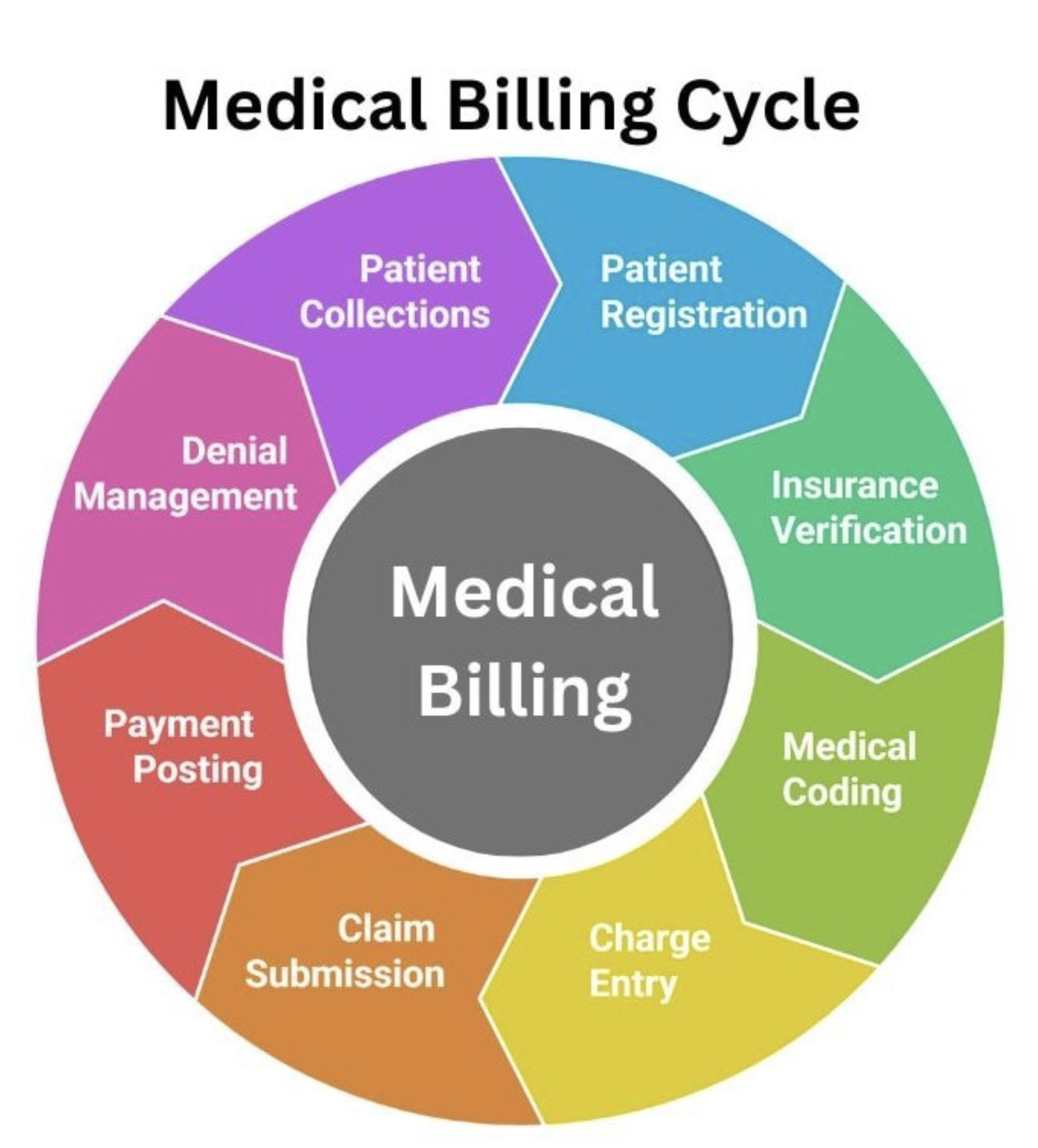
Medical billing companies in Massachusetts manage some or all of a healthcare practice’s revenue cycle, including eligibility, coding, claims, denials, appeals, accounts receivable, and patient billing. State-specific work includes meeting MassHealth’s 90-day filing window and routing managed care claims to the correct ACO partner plan.
Massachusetts Practices Are Losing Revenue in Places They Cannot See
Aged AR sits untouched. Denials remain unworked long enough to cross filing limits. In Massachusetts, those problems cannot be dismissed as the result of a large self-pay population.
The state’s uninsured rate is 2.8%, compared with 8.2% nationally. That coverage inversion leaves your practice with almost no self-pay cushion and very little charity write-off to absorb a weak month. Most earned revenue has to pass through a payer. When collections fall short, the loss usually began upstream: an authorization was missed, a code was wrong, a claim stalled, or nobody followed the denial.
Massachusetts rewards claim discipline. Luxen works the full revenue cycle inside your software, from eligibility verification and certified medical coding through appeals and patient billing. You need each authorization timestamped, each submission tracked, and each unpaid balance assigned to someone who will work it before the deadline closes.
Medical Billing Services for Massachusetts Practices
Full-Service Medical Billing
Our full-service medical billing team manages the revenue cycle from eligibility through payment posting and zero balance. Your dedicated team works inside your existing practice management or EHR system instead of forcing you through a disruptive software migration.
Medical Coding
Our certified medical coders review documentation and apply the appropriate coding workflows for your specialty and payer mix. Better coding upstream can prevent avoidable denials downstream.
Denials and AR Recovery
Old accounts are often the fastest place to find recoverable revenue. Our denials and AR recovery service prioritizes aged accounts, identifies denial patterns, works payer responses, and pursues appropriate appeals and follow-up until the account reaches resolution.
Eligibility and Benefits Verification
Eligibility problems can create avoidable write-offs and patient-balance confusion. We verify coverage and benefits so your team has the information needed before claims and patient statements move forward.
Prior Authorization
Authorization requirements vary by payer, plan, service, and specialty. We manage prior authorization workflows so required approvals are addressed before services become preventable billing problems.
Patient Billing
Patient balances are part of the revenue cycle too. Our patient billing support keeps statements, balances, and follow-up organized so your practice is not leaving the final portion of earned revenue unattended.
Credentialing
Credentialing problems can delay payments before the first claim is ever submitted. We support provider enrollment and credentialing so practices stay operational with the plans they serve.
RCM, CCM and Telehealth
Practices increasingly need billing workflows that account for multiple care models and remote services. We support revenue-cycle processes for RCM, chronic care management, and telehealth programs, with medical virtual assistant support where a practice needs front-office coverage alongside billing.
Dashboards and Automations
You should not need to wait for a monthly spreadsheet to understand what is happening to your revenue. We use reporting and workflow automation to make trends in AR, denials, collections, and billing performance easier to identify and act on.
How Our Medical Billing Process Works
1. Start With a Billing Review
We begin with a 30-minute review of your AR aging, denial patterns, payer mix, and current billing workflow. The goal is simple: identify what is actually costing you money and where we would start.
2. Build the Revenue Recovery Plan
We identify the accounts, payer issues, coding patterns, workflow gaps, and filing risks that deserve attention first. You get a clear view of what should be worked immediately and what needs a process change.
3. Start With the Oldest Money
Working aged AR comes first because it represents revenue you have already earned. Our team works the backlog while establishing a consistent process for new claims and daily billing.
4. Run the Full Cycle
Once the foundation is in place, we take over the agreed portion of the revenue cycle: eligibility, coding, submissions, payment posting, denials, appeals, AR follow-up, patient billing, and reporting.
5. Improve the System, Not Just the Claims
The goal is not to create a permanent cycle of denials and appeals. We look for repeatable patterns so the practice can prevent the same billing problems from occurring again.
Why Massachusetts Practices Choose Luxen
20+ Years of Revenue Cycle Experience
Medical billing is not a process you learn from a checklist. Payer behavior, documentation, coding, authorization, and follow-up all require experience. Luxen brings more than two decades of experience to the revenue cycle.
Certified Coders
Coding quality affects everything downstream. Our billing operation includes certified coding expertise so claims are built with greater attention to documentation and payer requirements.
Your Existing EHR and Practice Management System
You do not have to replace the software your practice already uses. Luxen works within your existing system, including platforms such as athenahealth, DrChrono, ModMed, AdvancedMD, NextGen, eClinicalWorks, Meditab, OpenDental, and other systems.
A Named Team, Not a Random Support Queue
You should know who is responsible for your claims. Our model is built around dedicated people working inside your systems and learning the way your practice operates.
HIPAA-Compliant Workflows
Before accessing protected health information, we sign a business associate agreement, and healthcare engagements operate through HIPAA-compliant tooling.
AAPC, AHIMA and SOC 2
Luxen combines billing expertise with professional credentials and documented security and compliance standards, including AAPC and AHIMA expertise, HIPAA-compliant workflows, and SOC 2.
We Read the Numbers Before We Quote
We do not want to sell you a generic percentage based on a generic practice. We look at your AR aging, volume, specialty, payer mix, and denial profile first.




Medical Billing in Massachusetts: Understanding the Payer Landscape
Massachusetts has a 2.8% uninsured rate, compared with 8.2% nationally. Near-universal coverage changes where your revenue risk sits. There is little self-pay AR to blame when collections miss target. Most dollars must clear a payer’s rules, so authorization, coding, eligibility, claim submission, and denial follow-up carry more weight.
The scale is easy to miss. Massachusetts carriers received 1,578,924 prior authorization requests in 2024. They denied 205,293, or 13%. Request volume rose 13.3% from 2023, while carriers modified another 1% downward. Your exposure depends heavily on which carrier received the request and which service you provided.
The authorization lists are not close to uniform. One carrier required authorization on 2,619 codes in 2024. Another required it on 12,903. That five-fold spread is not a minor contract difference. It determines which services need approval before treatment, which records must be attached, and which claims can be paid. A generic authorization workflow will miss those differences. A practice with several major contracts is therefore running several different rulebooks, and each one can change. Pathology and lab had the lowest approval rate of any reported category, just 64.6%. For those services, weak authorization control reaches AR quickly.
MassHealth adds a separate routing problem. Its managed care structure uses Accountable Care Organizations and partner plans. In practice, billing MassHealth often means sending the claim to the member’s ACO partner plan, not directly to MassHealth. Verified plan names include WellSense, Mass General Brigham Health Plan, Tufts Health Together with Cambridge Health Alliance, Tufts Health Together with UMass Memorial Health, Fallon Health, Be Healthy Partnership, and Community Care Cooperative, known as C3. Each relationship can bring a different portal, authorization list, and denial process.
Eligibility must be checked again when coverage moves. The Tufts Health Together MCO product ended on January 1, 2026, while its two Accountable Care Partnership Plans continued. Around 30 providers moved between ACOs at the same time, affecting roughly 20,000 members. Receiving plans had to honor 90 days of continuity of care and carry existing authorizations across. Re-verifying coverage is not optional here, because a plan verified in December 2025 could still be wrong in January 2026, and MassHealth’s 90-day filing clock keeps running while your team finds the error.
Massachusetts Billing Rules That Can Affect Your Revenue
90 days from date of service
Timely filing
45 days
Prompt-pay requirement
MassHealth
State Medicaid program
MassHealth starts with a short clock. Under 130 CMR 450.309(A), the agency must receive a claim within 90 days of the date of service. If another insurer is responsible first, 130 CMR 450.313 allows 90 days from that insurer’s notice of final disposition, subject to an outside limit of 18 months from the date of service, whichever comes first.
The backstop is firm. Under 130 CMR 450.314, MassHealth will not pay a claim submitted or resubmitted more than 12 months after the service date. Two recovery routes can matter: a 90-day waiver request for claims meeting specified exceptions, and a separate final deadline appeal. Neither route makes late filing harmless. Each gives a qualifying claim a documented path back into review.
Commercial claims carry a different clock. M.G.L. c. 176G section 6 and M.G.L. c. 176I section 2 give a carrier 45 days after receiving completed reimbursement forms to pay, explain nonpayment in writing, or request the missing information in writing. If it does none of those, interest accrues from day 45 at 1.5% per month, capped at 18% per year. That interest should be identified and pursued through structured AR recovery, not lost inside aged AR.
Prior authorization timing can also create payment rights. Under 211 CMR 52.07, a carrier has two working days after obtaining all necessary information to make its determination. If it does not respond within that window, the authorization request is deemed granted. That rule only helps when your team can prove when the carrier had the complete request.
Massachusetts Medical Practices We Serve
We bill for behavioral health groups, and their contracts deserve a second look. Chapter 177 of the Acts of 2022 removed prior authorization for acute mental health treatment, required coverage of the psychiatric collaborative care model under three AMA billing codes, and set a payment floor. Behavioral health evaluation and management rates cannot be lower than primary care rates for the same licensure type and geographic region.
Radiology, pathology, and independent labs face a different exposure. Those categories generated 39.4% of Massachusetts prior authorization volume in 2024, while pathology and lab posted the lowest approval rate at 64.6%.
For orthopedics, physical therapy, chiropractic, and pain management, the PIP crossover matters. When a patient has health coverage, PIP pays the first $2,000 before the health plan becomes primary.
Hospital-affiliated practices and community health center groups also manage a Health Safety Net pathway, on top of the provider credentialing each plan requires. It is a payer of last resort layered behind commercial coverage, MassHealth, Medicare, or Health Connector coverage.
Serving Major Massachusetts Markets
- Boston
- Worcester
- Springfield
- Cambridge
- Lowell
- Brockton
- New Bedford
- Quincy
Payer relationships change as you move across the state. A group with sites in Boston and Springfield can face a different set of MassHealth partner plans at each one. Be Healthy Partnership is a western Massachusetts plan. Boston-area billing often runs through the Mass General Brigham and Beth Israel Lahey Health networks. In Worcester, Tufts Health Together works with UMass Memorial Health. Eligibility, authorization, and claim routing all have to follow the patient’s current plan and the contract at that specific site. We work remotely inside your existing system, so a multi-site group keeps one view of its revenue while the payer mix changes market to market.
We run the same model in other states, with the payer rules, filing windows and Medicaid structure rebuilt for each one. See New Hampshire medical billing, New York medical billing, Texas medical billing, Colorado medical billing, Maryland medical billing, Arizona medical billing, Ohio medical billing, Virginia medical billing, Georgia medical billing, Delaware medical billing, Alabama medical billing, Michigan medical billing, Vermont medical billing, New Jersey medical billing, Utah medical billing, Connecticut medical billing, Louisiana medical billing, Washington medical billing, Hawaii medical billing, Rhode Island medical billing, Alaska medical billing, Missouri medical billing, Montana medical billing, South Carolina medical billing, South Dakota medical billing, Wisconsin medical billing, Kentucky medical billing, Oregon medical billing, Wyoming medical billing, Nevada medical billing, Mississippi medical billing, North Dakota medical billing, West Virginia medical billing, Nebraska medical billing, New Mexico medical billing, and Kansas medical billing, or start from the full list of medical billing companies.
What Massachusetts Practices Say About Working With Luxen
“Luxen Talent reviewed six months of behavioral health E/M payments and found 74 claims paid below the applicable primary care comparison rate. Their team reopened the underpayments, recovered $86,420, and reduced our AR older than 60 days from 24.6% to 13.9% within five months. They also built separate workflows for acute mental health treatment and standard outpatient services, so our staff stopped treating every denial as a documentation problem.”
Behavioral Health Operations Director, Multi-Location Psychiatry and Behavioral Health Group
“After the January 2026 MassHealth plan changes, Luxen Talent rechecked eligibility for 1,184 scheduled visits, corrected the ACO partner plan on 96 patient records, and resubmitted 71 claims before the 90-day filing window closed. They recovered $47,860 from claims sent to the wrong payer and reduced eligibility denials from 12.7% to 5.8% within four months. Our Boston, Worcester, and Springfield locations now have separate payer-routing rules without needing separate billing teams.”
Practice Administrator, Multi-Location Primary Care and Specialty Group
The same approach, documented end to end: our ambulance billing case study and dental practice case study.
What Does Medical Billing Cost in Massachusetts?
3% to 6% of collections
Luxen's pricing generally falls between 3% and 6% of collections, depending on claim volume, specialty, payer mix, and how much of the revenue cycle your practice hands over.
Larger-volume practices can generally access the lower end of the range because billing economics improve as claim volume increases. A smaller or more complex practice may fall toward the higher end because the amount of work per account is greater.
For comparison, published billing-industry pricing guides commonly place percentage-based medical billing somewhere around the mid-single digits, with higher ranges for smaller or more complex practices.
The more important question, however, is not whether a billing company charges 3%, 4%, 5%, or 6%.
It is what happens to collections after you hire them.
A lower fee attached to weak billing is still expensive.
The Risks of Outsourcing Your Medical Billing
Outsourcing is not automatically the right choice for every practice.
A billing company is a poor fit if you are unwilling to share operational visibility, if the vendor uses a rotating pool of people who do not learn your practice, or if the company cannot explain why your claims are being denied.
There is also a real risk in choosing a vendor that promises aggressive collection improvements without understanding your payer mix and specialty.
That is why Luxen starts with the numbers.
You should see the AR aging. You should understand your major denial categories. You should know what is being worked. And you should know what your billing company believes is realistically recoverable.
The right outsourcing relationship should make your revenue cycle more visible, not less.
How Much Revenue Are You Missing?
Look at your AR aging.
- How much is sitting past 90 days?
- How much is past 120 days?
- Which payers represent the largest outstanding balances?
- What are your top five denial reasons?
- How many claims are repeatedly resubmitted without a clear resolution?
- How much patient responsibility remains uncollected?
- How many claims are approaching a filing deadline?
Those numbers tell a story.
Send us your AR aging and we will tell you where we would start.
A Message From the Luxen Founder
I started Luxen because medical practices should not have to choose between doing great clinical work and running a financially healthy business.
Billing is too important to be treated as an afterthought. When claims are submitted incorrectly, denials sit untouched, or aged AR is ignored, the practice feels it everywhere, from cash flow and payroll to staffing decisions and growth.
Our job is to bring discipline to that part of the business.
We work inside the systems practices already use, build accountable billing workflows, and focus on the revenue that is actually recoverable.
We believe your billing partner should know your numbers, your specialty, your payers, and your practice, not just your account number.
Shivam Pujara
Founder, Luxen Talent (& Madhupa)
More on how we built the Luxen billing team.
.avif)
Transparent, U.S.-Focused Billing Support
Your Practice Keeps Its Systems
You do not need to switch EHR or practice management software to work with Luxen.
Your Data Stays Protected
Luxen healthcare engagements use HIPAA-compliant workflows, and we execute a business associate agreement before accessing protected health information.
Your Team Knows Who Owns the Work
We use a dedicated team model so responsibility does not disappear into a generic support queue.
You Can Start With Aged AR
Many practices begin with their old AR before moving into the daily revenue cycle. That gives both sides the opportunity to demonstrate results before expanding the engagement.
Massachusetts Medical Billing FAQs
Why outsource medical billing in Massachusetts?
Massachusetts has a 2.8% uninsured rate, so weak collections rarely begin with a large self-pay balance. Revenue leaks earlier, through missed authorizations, coding errors, stalled claims, and denials nobody works. In 2024, carriers denied 13% of prior authorization requests, and their authorization lists ranged from 2,619 to 12,903 codes. Outsourcing gives each payer rule, submission, and denial a named owner before filing rights expire and cash reaches your account faster.
Do you work with MassHealth?
Yes. We submit and track MassHealth claims through the Provider Online Service Center, or POSC, and verify eligibility through the Eligibility Verification System, or EVS. The filing window is 90 days, with a 12-month final deadline. We also prepare qualifying 90-day waiver requests. Because most managed care claims route through an ACO partner plan, we work with plans such as WellSense, Mass General Brigham Health Plan, and Tufts Health Together.
How do you handle denied claims?
We work each denial to resolution, document every payer contact, and trace recurring denials back to their source, such as eligibility, authorization, coding, or missing documentation. Massachusetts adds a useful enforcement point. Under 211 CMR 52.07, a carrier has two working days after receiving all necessary information to decide a prior authorization request. If the carrier does not answer within that window, the request is deemed granted.
Is this cost-effective for a small Massachusetts practice?
Luxen generally charges 3% to 6% of collections, based on volume, specialty, payer mix, and scope. For a small Massachusetts practice, the return depends on what disciplined billing recovers. With only 2.8% uninsured, there is little patient-payment cushion. The money sits in authorization control, denial follow-up, and underpaid claims, including statutory prompt-pay interest of 1.5% per month that many small practices never identify or bill. That can exceed the fee.
Book a Billing Review
You do not need another sales presentation.
Bring your AR aging, your denial data, and the questions you already have about your billing operation.
In a 30-minute Billing Review, we will look at where your revenue is sitting, where claims are breaking down, what we would prioritize first, and what outsourcing would cost based on your practice.
Send us your AR aging. We will tell you what we believe is recoverable.
