%20(1).avif)
What Are Medical Billing Companies in Minnesota?
Medical billing companies in Minnesota manage claims, denials, payment follow-up, patient balances, and related revenue cycle work for medical practices. Under Minnesota Statutes section 62Q.75, a provider has six months from the date of service to submit a claim, and a health plan owes payment or denial on a clean claim within 30 calendar days.
Minnesota Practices Are Losing Revenue in Places They Cannot See
Aged AR is obvious. A denial file nobody has touched in ninety days is just as expensive and easier to ignore. Minnesota makes both worse, for a reason most practice managers never check.
Minnesota Statutes section 62Q.75 gives a health plan 30 calendar days to pay or deny a clean claim, with 1.5% interest per month after that. The same section sets your deadline: six months from the date of service to submit the claim. Not twelve. A claim sitting in a work queue past month six is not late. It is gone.
Then Minnesota rewrote prior authorization. Since January 1, 2026 six categories of care cannot require it at all, and an approval for a chronic condition no longer expires. Both are money. Both need someone counting.
Medical Billing Services for Minnesota Practices
Full-Service Medical Billing
Our full-service medical billing team manages the revenue cycle from eligibility through payment posting and zero balance. Your dedicated team works inside your existing practice management or EHR system instead of forcing you through a disruptive software migration.
Medical Coding
Our certified medical coders review documentation and apply the appropriate coding workflows for your specialty and payer mix. Better coding upstream can prevent avoidable denials downstream.
Denials and AR Recovery
Old accounts are often the fastest place to find recoverable revenue. Our denials and AR recovery service prioritizes aged accounts, identifies denial patterns, works payer responses, and pursues appropriate appeals and follow-up until the account reaches resolution. In Minnesota that work is time-boxed, because section 62Q.75 gives a provider six months from the date of service to submit a commercial claim.
Eligibility and Benefits Verification
Eligibility problems can create avoidable write-offs and patient-balance confusion. We verify coverage and benefits so your team has the information needed before claims and patient statements move forward.
Prior Authorization
Authorization requirements vary by payer, plan, service, and specialty. In Minnesota a state-regulated plan owes a standard decision in five business days and an expedited one in 48 hours, and since January 1, 2026 it cannot require authorization at all for outpatient mental health or substance use disorder treatment, so we manage prior authorization workflows against those rules rather than waiting on the payer.
Patient Billing
Patient balances are part of the revenue cycle too. Our patient billing support keeps statements, balances, and follow-up organized so your practice is not leaving the final portion of earned revenue unattended.
Credentialing
Credentialing problems can delay payments before the first claim is ever submitted. We support provider enrollment and credentialing so practices stay operational with the plans they serve, and we date-stamp every application because Minnesota gives a health plan three business days to flag a deficiency and 45 days to decide a clean application under section 62Q.097.
RCM, CCM and Telehealth
Practices increasingly need billing workflows that account for multiple care models and remote services. We support revenue-cycle processes for RCM, chronic care management, and telehealth programs, with medical virtual assistant support where a practice needs front-office coverage alongside billing.
Dashboards and Automations
You should not need to wait for a monthly spreadsheet to understand what is happening to your revenue. We use reporting and workflow automation to make trends in AR, denials, collections, and billing performance easier to identify and act on.
How Our Medical Billing Process Works
1. Start With a Billing Review
We begin with a 30-minute review of your AR aging, denial patterns, payer mix, and current billing workflow. The goal is simple: identify what is actually costing you money and where we would start.
2. Build the Revenue Recovery Plan
We identify the accounts, payer issues, coding patterns, workflow gaps, and filing risks that deserve attention first. You get a clear view of what should be worked immediately and what needs a process change.
3. Start With the Oldest Money
Working aged AR comes first because it represents revenue you have already earned. Our team works the backlog while establishing a consistent process for new claims and daily billing.
4. Run the Full Cycle
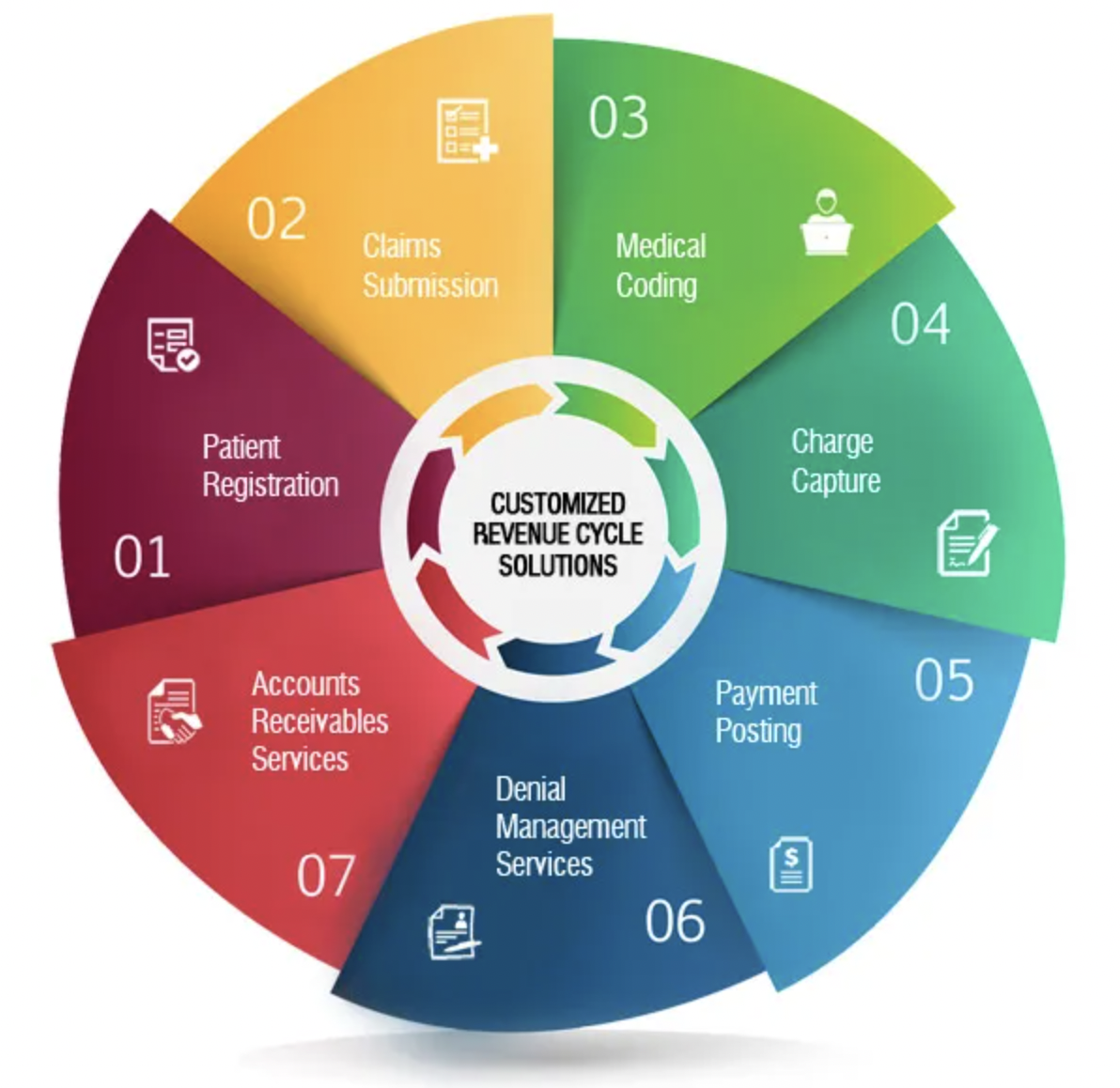
Once the foundation is in place, we take over the agreed portion of the revenue cycle: eligibility, coding, submissions, payment posting, denials, appeals, AR follow-up, patient billing, and reporting.
5. Improve the System, Not Just the Claims
The goal is not to create a permanent cycle of denials and appeals. We look for repeatable patterns so the practice can prevent the same billing problems from occurring again.
Why Minnesota Practices Choose Luxen
20+ Years of Revenue Cycle Experience
Medical billing is not a process you learn from a checklist. Payer behavior, documentation, coding, authorization, and follow-up all require experience. Luxen brings more than two decades of experience to the revenue cycle.
Certified Coders
Coding quality affects everything downstream. Our billing operation includes certified coding expertise so claims are built with greater attention to documentation and payer requirements.
Your Existing EHR and Practice Management System
You do not have to replace the software your practice already uses. Luxen works within your existing system, including platforms such as athenahealth, DrChrono, ModMed, AdvancedMD, NextGen, eClinicalWorks, Meditab, OpenDental, and other systems.
A Named Team, Not a Random Support Queue
You should know who is responsible for your claims. Our model is built around dedicated people working inside your systems and learning the way your practice operates.
HIPAA-Compliant Workflows
Before accessing protected health information, we sign a business associate agreement, and healthcare engagements operate through HIPAA-compliant tooling.
AAPC, AHIMA and SOC 2
Luxen combines billing expertise with professional credentials and documented security and compliance standards, including AAPC and AHIMA expertise, HIPAA-compliant workflows, and SOC 2.
We Read the Numbers Before We Quote
We do not want to sell you a generic percentage based on a generic practice. We look at your AR aging, volume, specialty, payer mix, and denial profile first.




Medical Billing in Minnesota: Understanding the Payer Landscape
Minnesota’s fully insured commercial market is small and heavily concentrated, and the second half of that sentence matters more than the first. On 2024 data, Blue Cross Blue Shield of Minnesota held 57% of the fully insured large group market and 65% of small group. Medica followed at 29% and 27%, UnitedHealth at 11% and 7%. Total fully insured enrollment was 415,248 in large group and 131,598 in small group. Those totals are small for a state this size because most large Minnesota employers self-fund, which puts a meaningful share of your commercial book under ERISA and outside every state rule below.
Medicare is the bigger book for most practices. 1,193,633 Minnesotans were enrolled as of January 2026, and about 56% are in a Medicare Advantage or Medicare Cost plan, leaving roughly 44% in Original Medicare. Minnesota is one of the last places where Cost plans still operate, available in 21 counties in 2026 through Blue Cross Blue Shield of Minnesota and Medica, and they do not behave like Advantage plans at the claim level. Original Medicare Part A and Part B claims run through National Government Services, the Jurisdiction 6 Medicare Administrative Contractor for Illinois, Minnesota, and Wisconsin.
Minnesota Health Care Programs covered 1,135,076 people through Medicaid and CHIP as of February 2026, with the expansion population at 212,628 as of June 2025. MinnesotaCare moves faster: 106,204 enrollees in December 2025, 78,540 in January 2026 after a premium change, 87,391 by May 2026. Managed care runs through Blue Plus, HealthPartners, Medica, UCare, Hennepin Health, PrimeWest Health, South Country Health Alliance, and Itasca Medical Care, and which of them a patient can pick depends on their county and their program. Three of those are county-based purchasers rather than statewide HMOs, so two clinics an hour apart can face entirely different Medicaid rosters and entirely different credentialing queues.
Dual eligible patients get a program of their own. Minnesota Senior Health Options combines Medicare and Medical Assistance into a single plan for members age 65 and older who hold both. Enrollment is voluntary, and it reaches every Minnesota county except Beltrami, Clearwater, Hubbard, and Lake of the Woods. Minnesota Senior Care Plus and Special Needs BasicCare sit beside it with their own plan rosters.
Auto is a payer here too, not an edge case. Minnesota is a no-fault state, and each injured person carries $20,000 in medical expense benefits under section 65B.44 before any health plan is reached. Those claims keep their own clock and their own interest rate, and a billing team that treats them as ordinary commercial AR loses them one at a time.
Underneath all of it sits a rule about format, and it is the Minnesota fact out-of-state billing teams get wrong most often. Section 62J.536 requires eligibility checks, claims, and remittance advice to be exchanged electronically, on a single statewide uniform companion guide, by every provider and every group purchaser. Paper is not a fallback here. Minnesota Health Care Programs enforces the same thing at program level. Claims file through MN-ITS, and paper is accepted only in narrow circumstances from out-of-state providers who are not yet enrolled.
Minnesota Billing Rules That Can Affect Your Revenue
6 months from date of service (commercial, MN Stat. 62Q.75); 12 months (MHCP)
Timely filing
30 calendar days clean claim
Prompt-pay requirement
Minnesota Health Care Programs, Medical Assistance and MinnesotaCare
State Medicaid program
Under Minnesota Statutes section 62Q.75, a health plan company or third-party administrator must pay or deny a clean claim within 30 calendar days of receipt. Miss it and the claim carries interest at 1.5% per month, or any part of a month, paid to the provider at least quarterly. No interest is owed on a claim held for review of potentially fraudulent or abusive billing. The same section sets your side of the clock. A claim must be submitted within six months from the date of service, or from the date you learned the correct name and address of the responsible payer, whichever is later. Minnesota puts that floor in statute rather than leaving it to the contract, and it is half what most billing operations assume.
The recoupment limit in the same section runs the other way, and almost nobody claims it. Once a clean claim has been paid, the contract must set a 12-month deadline on all adjustments and recoupments, with narrow exceptions for coordination of benefits, subrogation, duplicate claims, retroactive terminations, and fraud. A takeback letter on a claim paid two years ago is a letter to answer, not a debit to accept.
Prior authorization changed on January 1, 2026. Under section 62M.07 a plan may not require prior authorization for emergency services, outpatient mental health treatment, outpatient substance use disorder treatment, antineoplastic cancer treatment consistent with National Comprehensive Cancer Network guidelines, preventive services rated A or B by the United States Preventive Services Task Force, CDC-recommended immunizations, women’s preventive services, pediatric hospice, or treatment delivered through a neonatal abstinence program. Medications are excluded from the mental health, substance use, and cancer categories. The same law says an authorization for a chronic condition, one expected to last a year or more, does not expire unless the standard of treatment changes.
Turnaround sits in section 62M.05. A standard determination is due within five business days of the request. An expedited determination is due as fast as the patient’s condition requires and no later than 48 hours. Under section 62A.59 a plan may not retroactively deny a claim for missing prior authorization when no authorization requirement was in effect on the date of service. These rules reach state-regulated plans and not self-funded ERISA plans, which is why sorting your payers into the right bucket is the first piece of authorization work, not the last.
Credentialing carries a statutory clock here, which most states do not have. Under section 62Q.097 a health plan company has three business days to tell you an application is missing something, and 45 days to decide a clean application, with one 30-day extension where a quality or safety concern is identified. On request it must confirm whether your file is clean and name the date it will decide. Blue Cross Blue Shield of Minnesota, HealthPartners, Medica, UCare, and PreferredOne accept the Minnesota Uniform Credentialing Application, so the file gets built once and the clock is worth starting on paper.
Auto no-fault keeps its own deadlines. Benefits are overdue if not paid within 30 days after the insurer receives reasonable proof of the fact and amount of the loss, and overdue payments bear 15% simple interest a year under section 65B.54.
Section 62J.536 requires eligibility, claims, and remittance advice to move electronically on Minnesota’s uniform companion guide, enforced by the Commissioner of Health with civil penalties up to $100 per violation and $25,000 a year. Minnesota Health Care Programs sets its own clocks: 12 months from the date of service for an initial claim, and for a replacement claim, six months from the date of the incorrect payment or 12 months from the date of service, whichever is greater. Workers’ compensation has its own rules, and the tightest deadline in them is yours. Under Minnesota Statutes section 176.135 and Minnesota Rules part 5221.0600 a provider must submit an itemized statement of charges within 60 days of the service, after which a payer has 30 calendar days to pay, deny, or ask for more information, and any denial or reduction must cite the specific rule part and subpart it relies on.
Two rules govern what you can ask the patient for. Balance billing by a nonparticipating provider at a participating facility, on a referred specimen, or on emergency services is prohibited under section 62Q.556 without advance written consent. And since October 1, 2024 the Debt Fairness Act bars reporting medical debt to credit agencies, bars withholding medically necessary care over an unpaid balance, and ended automatic spousal liability for medical debt.
Minnesota Medical Practices We Serve
We bill for behavioral health, psychiatry, therapy, clinical social work, and substance use disorder treatment, where the January 2026 rule pulling outpatient mental health and substance use treatment out of prior authorization changes what your front office should be doing before a visit.
We bill for oncology, hematology, and infusion, where antineoplastic treatment consistent with National Comprehensive Cancer Network guidelines no longer needs authorization while the drugs still do. Two paths, two workflows.
We bill for primary care, pediatrics, internal medicine, and OB/GYN, where preventive services rated A or B by the United States Preventive Services Task Force and CDC-recommended immunizations sit outside prior authorization entirely, and eligibility verification decides whether a preventive claim pays at zero cost share or lands on a patient statement.
We bill for cardiology, nephrology, orthopedics, and geriatrics, where 56% of Minnesota Medicare beneficiaries sit in an Advantage or Cost plan with its own rules and its own appeal path.
We bill for physical therapy, chiropractic, pain management, and rehabilitation, where long treatment courses meet a six-month statutory filing window under section 62Q.75 and a steady stream of auto no-fault files carrying $20,000 per injured person and 15% a year once payment is overdue. That combination punishes any practice without someone watching the calendar.
Serving Major Minnesota Markets
Luxen supports these markets remotely, inside the software your practice already uses.
Minneapolis
Saint Paul
Rochester
Duluth
Bloomington
Brooklyn Park
Plymouth
Woodbury
A Minnesota practice with Wisconsin or Illinois sites stays inside Medicare Jurisdiction 6, because National Government Services is the contractor for all three states. A western Minnesota group with sites across the North Dakota or South Dakota line files to a different contractor entirely. Medicaid splits the same way inside the state. A clinic in Hennepin County works a plan roster that includes Hennepin Health, a clinic in Itasca County works one that includes Itasca Medical Care, and PrimeWest Health and South Country Health Alliance cover their own county groups. Same encounter type, different contractors, different plan rosters.
We run the same model in other states, with the payer rules, filing windows and Medicaid structure rebuilt for each one. See Florida medical billing, Texas medical billing, New York medical billing, California medical billing, Illinois medical billing, Ohio medical billing, Georgia medical billing, Virginia medical billing, Maryland medical billing, Massachusetts medical billing, Colorado medical billing, Arizona medical billing, Delaware medical billing, Alabama medical billing, Michigan medical billing, Vermont medical billing, Oklahoma medical billing, Louisiana medical billing, Washington medical billing, Hawaii medical billing, Rhode Island medical billing, Alaska medical billing, Missouri medical billing, Montana medical billing, South Carolina medical billing, Wyoming medical billing, South Dakota medical billing, Oregon medical billing, Kentucky medical billing, Wisconsin medical billing, Nevada medical billing, Mississippi medical billing, North Dakota medical billing, West Virginia medical billing, Nebraska medical billing, New Mexico medical billing, and Kansas medical billing, or start from the full list of medical billing companies and what each one charges.
What Minnesota Practices Say About Working With Luxen
“We expected to change practice-management systems just to hire a new billing company. Luxen took over inside the system we already used without interrupting daily claim submissions. Collections remained steady throughout the transition, and our month-end reports now arrive by the fifth business day instead of three weeks late.”
Chief Operating Officer, Multi-Site Primary Care Group, Twin Cities, Minnesota
“Secondary claims and coordination-of-benefits denials were sitting untouched because no one clearly owned the follow-up. Luxen separated the registration errors from the payer issues, recovered $32,900 in the first 90 days, and reduced repeat COB denials by 58%.”
Billing Manager, Ophthalmology Practice, Duluth, Minnesota
More engagements are written up in our dental practice case study and our ambulance billing case study.
What Does Medical Billing Cost in Minnesota?
3% to 6% of collections
Luxen's pricing generally falls between 3% and 6% of collections, depending on claim volume, specialty, payer mix, and how much of the revenue cycle your practice hands over.
Larger-volume practices can generally access the lower end of the range because billing economics improve as claim volume increases. A smaller or more complex practice may fall toward the higher end because the amount of work per account is greater.
For comparison, published billing-industry pricing guides commonly place percentage-based medical billing somewhere around the mid-single digits, with higher ranges for smaller or more complex practices.
The more important question, however, is not whether a billing company charges 3%, 4%, 5%, or 6%.
It is what happens to collections after you hire them.
A lower fee attached to weak billing is still expensive.
The Risks of Outsourcing Your Medical Billing
Outsourcing is not automatically the right choice for every practice.
A billing company is a poor fit if you are unwilling to share operational visibility, if the vendor uses a rotating pool of people who do not learn your practice, or if the company cannot explain why your claims are being denied.
There is also a real risk in choosing a vendor that promises aggressive collection improvements without understanding your payer mix and specialty.
That is why Luxen starts with the numbers.
You should see the AR aging. You should understand your major denial categories. You should know what is being worked. And you should know what your billing company believes is realistically recoverable.
The right outsourcing relationship should make your revenue cycle more visible, not less.
How Much Revenue Are You Missing?
Look at your AR aging.
- How much is sitting past 90 days?
- How much is past 120 days?
- Which payers represent the largest outstanding balances?
- What are your top five denial reasons?
- How many claims are repeatedly resubmitted without a clear resolution?
- How much patient responsibility remains uncollected?
- How many claims are approaching a filing deadline?
Those numbers tell a story.
Send us your AR aging and we will tell you where we would start.
A Message From the Luxen Founder
I started Luxen because medical practices should not have to choose between doing great clinical work and running a financially healthy business.
Billing is too important to be treated as an afterthought. When claims are submitted incorrectly, denials sit untouched, or aged AR is ignored, the practice feels it everywhere, from cash flow and payroll to staffing decisions and growth.
Our job is to bring discipline to that part of the business.
We work inside the systems practices already use, build accountable billing workflows, and focus on the revenue that is actually recoverable.
We believe your billing partner should know your numbers, your specialty, your payers, and your practice, not just your account number.
Shivam Pujara
Founder, Luxen Talent (& Madhupa)
More on how we built the Luxen billing team.
.avif)
Transparent, U.S.-Focused Billing Support
Your Practice Keeps Its Systems
You do not need to switch EHR or practice management software to work with Luxen.
Your Data Stays Protected
Luxen healthcare engagements use HIPAA-compliant workflows, and we execute a business associate agreement before accessing protected health information.
Your Team Knows Who Owns the Work
We use a dedicated team model so responsibility does not disappear into a generic support queue.
You Can Start With Aged AR
Many practices begin with their old AR before moving into the daily revenue cycle. That gives both sides the opportunity to demonstrate results before expanding the engagement.
Minnesota Medical Billing FAQs
Why outsource medical billing in Minnesota?
Minnesota concentrates commercial risk in very few carriers. Blue Cross Blue Shield of Minnesota holds 57% of the fully insured large group market and 65% of small group, and about 56% of Minnesota Medicare beneficiaries sit in an Advantage or Cost plan. The state’s rules, a 30-day payment clock, 1.5% monthly interest, a six-month filing deadline and the 2026 prior authorization prohibitions, only turn into money when someone tracks them claim by claim.
Do you work with Minnesota Health Care Programs?
Yes. We work with Medical Assistance and MinnesotaCare, and with the plans Minnesota contracts with, including Blue Plus, HealthPartners, Medica, UCare, Hennepin Health, PrimeWest Health, South Country Health Alliance and Itasca Medical Care. Initial claims are due within 12 months of the date of service. Replacement claims are due within six months of the incorrect payment or 12 months of the date of service, whichever is greater. Claims file electronically through MN-ITS.
How do you handle denied claims?
We work denials through resolution and track the pattern behind them, because the same denial code can mean different things across payers. In Minnesota a plan owes a standard prior authorization determination within five business days and an expedited one within 48 hours, and since January 1, 2026 six categories of care cannot require authorization at all. We also check takebacks against the 12-month recoupment limit in section 62Q.75 before anyone books an adjustment.
Is this cost-effective for a small Minnesota practice?
Luxen’s pricing generally falls between 3% and 6% of collections, depending on volume, specialty, payer mix, and scope. Minnesota’s uninsured rate rose from 3.8% in 2023 to 5.8% in 2025, its highest since 2017, so patient balances are a growing part of the problem rather than a rounding error. Unclaimed 1.5% monthly interest and claims lost to the six-month filing window are money already earned.
Book a Billing Review
You do not need another sales presentation.
Bring your AR aging, your denial data, and the questions you already have about your billing operation.
In a 30-minute Billing Review, we will look at where your revenue is sitting, where claims are breaking down, what we would prioritize first, and what outsourcing would cost based on your practice.
Send us your AR aging. We will tell you what we believe is recoverable.
