%20(1).avif)
What Are Medical Billing Companies in Oklahoma?
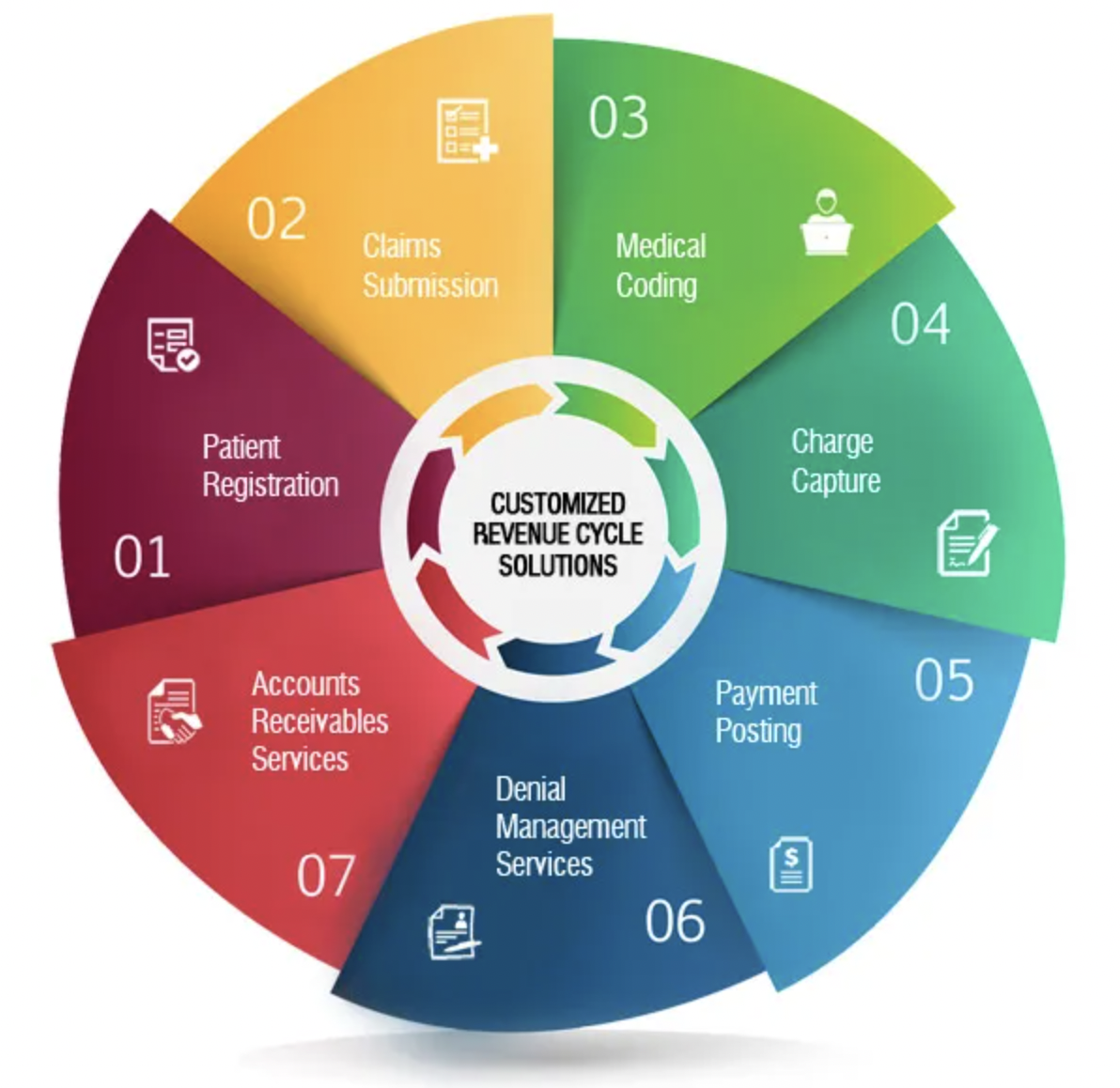
Medical billing companies in Oklahoma manage claims, denials, payment posting, accounts receivable, and related revenue cycle work for healthcare providers serving the state. Their work must account for Oklahoma rules, including a six-month SoonerCare filing limit, a 30-day electronic and 45-day paper commercial payment clock under 36 O.S. section 1219, and prior authorizations that are deemed approved when the plan misses its deadline.
Oklahoma Practices Are Losing Revenue in Places They Cannot See
Most Oklahoma write-offs are not denials. They are SoonerCare claims that reached the fiscal agent after month six, and they never show up in a denial report because nothing was ever denied.
Oklahoma runs two very different clocks on the same patient panel. Commercial claims fall under 36 O.S. section 1219, which gives the insurer 30 days on an electronic claim and 45 on paper. SoonerCare gives your practice six months from the date of service, and OHCA counts receipt by the fiscal agent, not the day you dropped the claim. A Medicare crossover gets 90 days from the date you receive the Medicare disposition. Three numbers, one billing team, and no software that warns you which one applies.
Luxen works the full revenue cycle inside your system, from eligibility verification and certified medical coding through appeals and patient billing. Your team can see where claims stall, who owns the next step, and what is still collectible. In Oklahoma the filing calendar is not an administrative detail. It decides how much of the month’s work turns into cash.
Medical Billing Services for Oklahoma Practices
Full-Service Medical Billing
Our full-service medical billing team manages the revenue cycle from eligibility through payment posting and zero balance. Your dedicated team works inside your existing practice management or EHR system instead of forcing you through a disruptive software migration.
Medical Coding
Our certified medical coders review documentation and apply the appropriate coding workflows for your specialty and payer mix. Better coding upstream can prevent avoidable denials downstream.
Denials and AR Recovery
Old accounts are often the fastest place to find recoverable revenue. Our denials and AR recovery service prioritizes aged accounts, identifies denial patterns, works payer responses, and pursues appropriate appeals and follow-up until the account reaches resolution.
Eligibility and Benefits Verification
Eligibility problems can create avoidable write-offs and patient-balance confusion. We verify coverage and benefits so your team has the information needed before claims and patient statements move forward.
Prior Authorization
Authorization requirements vary by payer, plan, service, and specialty. We manage prior authorization workflows so required approvals are addressed before services become preventable billing problems.
Patient Billing
Patient balances are part of the revenue cycle too. Our patient billing support keeps statements, balances, and follow-up organized so your practice is not leaving the final portion of earned revenue unattended.
Credentialing
Credentialing problems can delay payments before the first claim is ever submitted. We support provider enrollment and credentialing so practices stay operational with the plans they serve.
RCM, CCM and Telehealth
Practices increasingly need billing workflows that account for multiple care models and remote services. We support revenue-cycle processes for RCM, chronic care management, and telehealth programs, with medical virtual assistant support where a practice needs front-office coverage alongside billing.
Dashboards and Automations
You should not need to wait for a monthly spreadsheet to understand what is happening to your revenue. We use reporting and workflow automation to make trends in AR, denials, collections, and billing performance easier to identify and act on.
How Our Medical Billing Process Works
1. Start With a Billing Review
We begin with a 30-minute review of your AR aging, denial patterns, payer mix, and current billing workflow. The goal is simple: identify what is actually costing you money and where we would start.
2. Build the Revenue Recovery Plan
We identify the accounts, payer issues, coding patterns, workflow gaps, and filing risks that deserve attention first. You get a clear view of what should be worked immediately and what needs a process change.
3. Start With the Oldest Money
Working aged AR comes first because it represents revenue you have already earned. Our team works the backlog while establishing a consistent process for new claims and daily billing.
4. Run the Full Cycle
Once the foundation is in place, we take over the agreed portion of the revenue cycle: eligibility, coding, submissions, payment posting, denials, appeals, AR follow-up, patient billing, and reporting.
5. Improve the System, Not Just the Claims
The goal is not to create a permanent cycle of denials and appeals. We look for repeatable patterns so the practice can prevent the same billing problems from occurring again.
Why Oklahoma Practices Choose Luxen
20+ Years of Revenue Cycle Experience
Medical billing is not a process you learn from a checklist. Payer behavior, documentation, coding, authorization, and follow-up all require experience. Luxen brings more than two decades of experience to the revenue cycle.
Certified Coders
Coding quality affects everything downstream. Our billing operation includes certified coding expertise so claims are built with greater attention to documentation and payer requirements.
Your Existing EHR and Practice Management System
You do not have to replace the software your practice already uses. Luxen works within your existing system, including platforms such as athenahealth, DrChrono, ModMed, AdvancedMD, NextGen, eClinicalWorks, Meditab, OpenDental, and other systems.
A Named Team, Not a Random Support Queue
You should know who is responsible for your claims. Our model is built around dedicated people working inside your systems and learning the way your practice operates.
HIPAA-Compliant Workflows
Before accessing protected health information, we sign a business associate agreement, and healthcare engagements operate through HIPAA-compliant tooling.
AAPC, AHIMA and SOC 2
Luxen combines billing expertise with professional credentials and documented security and compliance standards, including AAPC and AHIMA expertise, HIPAA-compliant workflows, and SOC 2.
We Read the Numbers Before We Quote
We do not want to sell you a generic percentage based on a generic practice. We look at your AR aging, volume, specialty, payer mix, and denial profile first.


Medical Billing in Oklahoma: Understanding the Payer Landscape
Oklahoma commercial billing is close to a single-payer problem. Blue Cross and Blue Shield of Oklahoma, part of HCSC, held 298,062 of the 378,422 fully insured large group lives in the state in 2024, or 79%. In small group it held 143,200 of 158,841, or 90%. CommunityCare, the Tulsa plan, is second in both at 10% and 7%. UnitedHealthcare is third. One carrier’s edit logic, medical policy, and appeal queue effectively set your commercial denial rate. The concentration cuts both ways. A fix that works on one Blue Cross denial reason usually works across your whole commercial book.
SoonerCare changed shape on 1 April 2024, when SoonerSelect managed care went live. Three health plans took the medical business: Aetna Better Health of Oklahoma, Humana Healthy Horizons of Oklahoma, and Oklahoma Complete Health. DentaQuest and Liberty Dental took dental. Oklahoma Complete Health also runs the SoonerSelect Children’s Specialty Program for children in Child Welfare Services custody, former foster care, adoption assistance, and juvenile justice cases. The Oklahoma Health Care Authority still runs fee-for-service SoonerCare behind all of it. Statewide Medicaid and CHIP enrollment reached 989,060 in September 2025, roughly a quarter above pre-expansion levels after SQ 802 took effect on 1 July 2021.
American Indian and Alaska Native members choose whether to join a SoonerSelect plan. If they do not opt in, they stay on fee-for-service SoonerCare. A practice serving tribal communities therefore bills two entirely different Medicaid programs for demographically similar patients, often on the same day. Rechecking eligibility before the visit is what keeps those claims apart.
Medicare covered 805,957 Oklahomans in 2024, and 325,389 of them, 40.4%, were in Medicare Advantage. That leaves close to six in ten on Original Medicare, a higher fee-for-service share than most states carry. Part A and Part B fee-for-service claims run through Novitas Solutions, the A/B MAC for Jurisdiction H, which also covers Arkansas, Colorado, Louisiana, Mississippi, New Mexico, and Texas.
Oklahoma Billing Rules That Can Affect Your Revenue
6 months from date of service, SoonerCare and SoonerSelect; 90 days for Medicare crossovers
Timely filing
30 days electronic, 45 days paper
Prompt-pay requirement
SoonerCare, SoonerSelect
State Medicaid program
Oklahoma pays on two clocks. Under 36 O.S. section 1219, a commercial insurer has 30 calendar days to pay a clean electronic claim and 45 days for paper, counted from the day it receives the claim. Overdue payments carry simple interest at 10% a year, and the prevailing party in litigation over one recovers attorney fees.
The part almost nobody works is subsection (C). If the insurer wants to hold a claim for a defect, it has to tell you in writing within 30 days of receipt, name the portion causing the delay, and say what it needs. If that notice never came, the statute makes the omission prima facie evidence that the claim will be paid under the terms of the policy. That is an appeal argument, not a complaint letter. The Insurance Commissioner also publishes a standardized prompt pay form, and once you file it the insurer has 10 days to produce either proof of payment or its reason for the delay. Failing section 1219 is an unfair claim settlement practice under section 1250.5(5), and section 1250.14 lets the Commissioner assess $100 to $5,000 per occurrence.
SoonerSelect is stricter than commercial, which catches most billing teams out. Under 56 O.S. section 4002.7(B), a contracted entity must meet the same 30 and 45 day clocks, pay at least 90% of all clean claims within 14 days, and pay 1.5% a month on anything late. That is 18% a year against the commercial 10%. The same subsection bars the plan from requesting medical records before it pays a clean claim. Records come after payment, for medical necessity review. Every denial and every downcode has to carry a detailed basis and a description of what would substantiate the claim. Under section 4002.7(D)(3), OHCA assesses financial penalties on any SoonerSelect plan whose claims denial error rate runs above 5%.
Filing windows are short. SoonerCare allows six months from the date of service under OAC 317:30-3-11(a), against the twelve months federal rules would permit, and a denied claim counts as proof of timely filing. Medicare crossovers get 90 days from the date you receive notice of the Medicare disposition. SoonerSelect plans apply the same six-month limit under 56 O.S. section 4002.7(B). Structured AR recovery in Oklahoma starts by sorting the backlog by filing deadline before anything else gets touched.
Prior authorization changed on 1 January 2025. HB 3190 created 36 O.S. sections 6570.1 through 6570.11, giving a plan 72 hours to answer an urgent request and 7 days for a non-urgent one, both running from the point it has all necessary information. Section 6570.6(B) then does something rare. If the plan misses the deadline, the service is deemed authorized. The condition is where practices lose it: the remedy only applies where the provider submitted everything through the review entity’s own authorized prior authorization system. Fax the request and you have nothing to enforce.
Three more provisions belong in your workflow. An authorization cannot be revoked or restricted if the care happens within 45 business days of your receiving it, unless the patient lost eligibility. Section 6570.8(B) requires the plan to pay the contracted rate for authorized services, with five listed exceptions. An authorization covering a chronic condition on a non-inpatient service stays valid at least six months, and a new plan has to honor a previous plan’s authorization for the first 60 days of coverage. Prescription drug authorizations sit in their own statute, sections 6570.50 through 6570.59, effective 1 November 2025: 24 hours for urgent, four business days for non-urgent, and a three-year duration for chronic-condition drugs.
Read the scope line before relying on any of it. Section 6570.1(15) excludes SoonerSelect plans from the 2024 act, so the 72-hour clock and the deemed-approved remedy do not reach Medicaid managed care. The 2025 drug act goes the other way and applies to the Oklahoma Medicaid State Plan. Getting that backwards costs appeals.
Credentialing has hard numbers too. Under 36 O.S. section 4405.1, a plan has 10 days to tell you an application is incomplete, 7 days to start primary source verification once it is complete, and 45 days to decide a clean application. It may take one 60-day extension, and the whole process cannot exceed 180 days. Since 1 November 2024, subsection (F) requires the plan to treat the provider as in-network for reimbursement within 31 days of credentialing. Oklahoma does not backdate participation to your application date, which is the assumption practices tend to carry in from other states.
Two negatives matter as much as the rules. Oklahoma has no general recoupment lookback limit and no advance-notice requirement for taking money back on medical claims, so the 45-business-day authorization rule above is the closest thing you have. Oklahoma also has no balance billing statute, no out-of-network benchmark, and no state dispute process for general medical services, which leaves the federal No Surprises Act governing. The exception is ground ambulance, which the federal act left open. Under 36 O.S. section 6050.3, where no local rate has been filed, the minimum out-of-network payment is the lesser of 325% of the CMS ambulance fee schedule or billed charges, and the ambulance provider may not balance bill beyond in-network cost sharing. Those rates sunset on 31 December 2027 unless the Legislature acts.
Workers’ compensation runs on its own calendar. Under 85A O.S. section 50(H)(11) and OAC 810:15-15-2, the carrier owes payment within 45 days of receiving a complete and accurate invoice. Past that, the Commission may add up to 25% of the unpaid amount where it finds no good-faith reason for the delay, and up to $5,000 per occurrence where a carrier willfully and knowingly makes a pattern of it. Care recommended by the ODG is presumed reasonable, and a carrier denying it needs clear and convincing medical evidence. The presumption is not one-sided. Treatment outside ODG needs the same evidence, in writing, to the carrier, before payment.
Provider appeals in SoonerSelect follow OAC 317:2-3-10. You have six months from a claim denial to ask for reconsideration, 15 days for audit findings or a contract termination, and 30 calendar days from the reconsideration notice to appeal to a panel of reviewers who had no part in the desk review. Plans cannot use automated claim review software on medical necessity appeals. One thing to plan around: there is no state fair hearing for providers in Oklahoma. The OHCA administrative appeal, filed within 30 days, is where the road ends.
Oklahoma Medical Practices We Serve
Oklahoma has 38 federally recognized tribal nations headquartered in the state, and the IHS Oklahoma City Area covers roughly 59 health care locations across Oklahoma, Kansas, and part of Texas. Cherokee Nation Health Services alone runs a 60-bed hospital and nine health centers out of Tahlequah. Billing at or through an IHS or tribally operated 638 facility does not use a CPT fee schedule. It uses an encounter-based all-inclusive rate set annually in the Federal Register: for calendar year 2026, $826 per outpatient visit and $5,707 per inpatient day in the lower 48. A practice that codes those encounters the way it codes commercial visits is solving the wrong problem. Indian Health Care Providers are also protected essential community providers under 56 O.S. section 4002.2(11), so a SoonerSelect plan cannot exclude them from its network.
Infusion and injectable-heavy specialties carry the other Oklahoma exposure. Rheumatology, oncology, and pain management claims turn on NDC, billed units, and the documentation sitting behind them, and those denials rarely arrive labeled as drug denials.
We also work with orthopedic, occupational medicine, and physical therapy groups, where workers’ compensation authorization and the ODG evidence standard decide whether an account gets paid or ages. Behavioral health billing spans SoonerSelect plans and fee-for-service SoonerCare at the same time, which makes provider credentialing across every plan the first thing to get right rather than the last.
Serving Major Oklahoma Markets
- Oklahoma City
- Tulsa
- Norman
- Broken Arrow
- Edmond
- Lawton
- Moore
- Midwest City
Luxen serves these markets remotely, working inside the software your practice already uses. Oklahoma City billing runs through OU Health, INTEGRIS, and SSM Health, with Blue Cross and Blue Shield of Oklahoma behind most commercial volume. Tulsa is a different picture: Saint Francis, Ascension St. John, and Hillcrest, with CommunityCare holding a share of commercial lives it does not hold anywhere else in the state. Norman, Edmond, Broken Arrow, Moore, and Midwest City sit inside those two metros and follow the same plan mix.
Then there is the rest of the state. The Oklahoma Office of Rural Health designates 59 of Oklahoma’s 77 counties as rural, and 75 of 77 are Health Professional Shortage Areas. Oklahoma has 39 Critical Access Hospitals, six Rural Emergency Hospitals, 152 Rural Health Clinics, and 141 FQHC sites. Rural billing is different work: cost-based and encounter-based methodologies, thinner front-office staffing, and an uninsured rate of 11.5% that ranks 48th in the country and lands straight on your patient balances.
We run the same model in other states, with the payer rules, filing windows and Medicaid structure rebuilt for each one. See Arkansas medical billing, Texas medical billing, Colorado medical billing, California medical billing, New York medical billing, Florida medical billing, Illinois medical billing, Ohio medical billing, Michigan medical billing, Pennsylvania medical billing, Minnesota medical billing, Utah medical billing, Arizona medical billing, Georgia medical billing, Alabama medical billing, North Carolina medical billing, Virginia medical billing, Maryland medical billing, Delaware medical billing, Massachusetts medical billing, New Jersey medical billing, Vermont medical billing, Washington medical billing, Iowa medical billing, Hawaii medical billing, Missouri medical billing, Montana medical billing, Alaska medical billing, Wyoming medical billing, South Dakota medical billing, South Carolina medical billing, Kentucky medical billing, Oregon medical billing, Wisconsin medical billing, Nevada medical billing, Mississippi medical billing, North Dakota medical billing, West Virginia medical billing, Nebraska medical billing, New Mexico medical billing, and Kansas medical billing, or start from the full list of medical billing companies.
What Oklahoma Practices Say About Working With Luxen
Our injectable-drug claims were regularly delayed because the billed units and NDC information did not match the clinical documentation. Luxen added a pre-submission review that reduced drug-related denials from 16% to 4% and released $68,500 in held claims within 12 weeks.
Practice Administrator, rheumatology and infusion clinic, Oklahoma City, Oklahoma
Our workers’ compensation balances kept aging because every claim seemed to have a different authorization, employer, or documentation issue. Luxen assigned ownership to each account and reduced our workers’ compensation AR over 120 days by $43,200 in five months.
Managing Partner, orthopedic and occupational medicine group, Tulsa, Oklahoma
The same approach, documented end to end: our ambulance billing case study and dental practice case study.
What Does Medical Billing Cost in Oklahoma?
3% to 6% of collections
Luxen's pricing generally falls between 3% and 6% of collections, depending on claim volume, specialty, payer mix, and how much of the revenue cycle your practice hands over.
Larger-volume practices can generally access the lower end of the range because billing economics improve as claim volume increases. A smaller or more complex practice may fall toward the higher end because the amount of work per account is greater.
For comparison, published billing-industry pricing guides commonly place percentage-based medical billing somewhere around the mid-single digits, with higher ranges for smaller or more complex practices.
The more important question, however, is not whether a billing company charges 3%, 4%, 5%, or 6%.
It is what happens to collections after you hire them.
A lower fee attached to weak billing is still expensive.
The Risks of Outsourcing Your Medical Billing
Outsourcing is not automatically the right choice for every practice.
A billing company is a poor fit if you are unwilling to share operational visibility, if the vendor uses a rotating pool of people who do not learn your practice, or if the company cannot explain why your claims are being denied.
There is also a real risk in choosing a vendor that promises aggressive collection improvements without understanding your payer mix and specialty.
That is why Luxen starts with the numbers.
You should see the AR aging. You should understand your major denial categories. You should know what is being worked. And you should know what your billing company believes is realistically recoverable.
The right outsourcing relationship should make your revenue cycle more visible, not less.
How Much Revenue Are You Missing?
Look at your AR aging.
- How much is sitting past 90 days?
- How much is past 120 days?
- Which payers represent the largest outstanding balances?
- What are your top five denial reasons?
- How many claims are repeatedly resubmitted without a clear resolution?
- How much patient responsibility remains uncollected?
- How many claims are approaching a filing deadline?
Those numbers tell a story.
Send us your AR aging and we will tell you where we would start.
A Message From the Luxen Founder
I started Luxen because medical practices should not have to choose between doing great clinical work and running a financially healthy business.
Billing is too important to be treated as an afterthought. When claims are submitted incorrectly, denials sit untouched, or aged AR is ignored, the practice feels it everywhere, from cash flow and payroll to staffing decisions and growth.
Our job is to bring discipline to that part of the business.
We work inside the systems practices already use, build accountable billing workflows, and focus on the revenue that is actually recoverable.
We believe your billing partner should know your numbers, your specialty, your payers, and your practice, not just your account number.
Shivam Pujara
Founder, Luxen Talent (& Madhupa)
More on how we built the Luxen billing team.
.avif)
Transparent, U.S.-Focused Billing Support
Your Practice Keeps Its Systems
You do not need to switch EHR or practice management software to work with Luxen.
Your Data Stays Protected
Luxen healthcare engagements use HIPAA-compliant workflows, and we execute a business associate agreement before accessing protected health information.
Your Team Knows Who Owns the Work
We use a dedicated team model so responsibility does not disappear into a generic support queue.
You Can Start With Aged AR
Many practices begin with their old AR before moving into the daily revenue cycle. That gives both sides the opportunity to demonstrate results before expanding the engagement.
Oklahoma Medical Billing FAQs
Why outsource medical billing in Oklahoma?
Outsourcing gives your practice a team watching the six-month SoonerCare filing window instead of the twelve-month habit most billing software encourages. It also brings focused follow-up to a commercial market where Blue Cross and Blue Shield of Oklahoma holds 79% of fully insured large group lives and 90% of small group, so one carrier’s rules drive most of your denials. Oklahoma prior authorization law adds a deemed-approved remedy when a plan misses its deadline, but only where the request went through that plan’s own portal.
Do you work with SoonerCare and SoonerSelect?
Yes. Luxen bills fee-for-service SoonerCare through the Oklahoma Health Care Authority and all three SoonerSelect health plans: Aetna Better Health of Oklahoma, Humana Healthy Horizons of Oklahoma, and Oklahoma Complete Health. Claims must reach the fiscal agent within six months of the date of service, and crossover claims within 90 days of the Medicare disposition. SoonerSelect plans owe 1.5% monthly interest on late clean claims and must pay 90% of them within 14 days, which we track rather than assume.
How do you handle denied claims?
We assign denials, correct what can be corrected, submit appeals, and follow each account to payment or a documented outcome. We trace the pattern behind the denial: eligibility, authorization, coding, claim edits, or missed follow-up. In Oklahoma we also check whether the insurer sent the written defect notice that 36 O.S. section 1219(C) requires within 30 days. If it did not, the statute treats that omission as prima facie evidence the claim will be paid under the policy, which changes how the appeal is argued.
Is this cost-effective for a small Oklahoma practice?
Luxen charges 3% to 6% of collections, based on claim volume, specialty, payer mix, and how much of the revenue cycle you hand over. For a small Oklahoma practice the comparison is that fee against collections recovered, denials prevented, and staff hours returned. Late-payment interest is part of it and rarely pursued: 10% a year on overdue commercial claims under section 1219(F), and 1.5% a month on late SoonerSelect clean claims.
Book a Billing Review
You do not need another sales presentation.
Bring your AR aging, your denial data, and the questions you already have about your billing operation.
In a 30-minute Billing Review, we will look at where your revenue is sitting, where claims are breaking down, what we would prioritize first, and what outsourcing would cost based on your practice.
Send us your AR aging. We will tell you what we believe is recoverable.
