%20(1).avif)
What Are Medical Billing Companies in Alaska?
Medical billing companies in Alaska manage claims, denials, payment follow-up, patient balances, and related revenue cycle work for medical practices. Under AS 21.36.495, an insurer must pay or deny a clean claim within 30 days of receipt, must state what is missing within that same 30 days, and owes 15% annual interest on a late payment. A claim the insurer never questioned is presumed clean.
Alaska Practices Are Losing Revenue in Places They Cannot See
On January 1, 2024 Alaska deleted the rule that had been setting the floor under out-of-network payment in this state. The 80th percentile regulation is gone. Nothing replaced it. If your billing process was built before that date, it is pricing claims against a floor that no longer exists.
It is the largest change to Alaska revenue cycle work in years, and it did not arrive alone. Alaska has the lowest Medicare Advantage penetration in the country, no Medicaid managed care plans at all, a workers’ compensation deadline that kills a bill at 180 days, and a prior authorization law that does not take effect until 2027.
None of that shows up in aged AR as a line item. It shows up as claims that pay less than they used to, and nobody can say exactly when it started.
Medical Billing Services for Alaska Practices
Full-Service Medical Billing
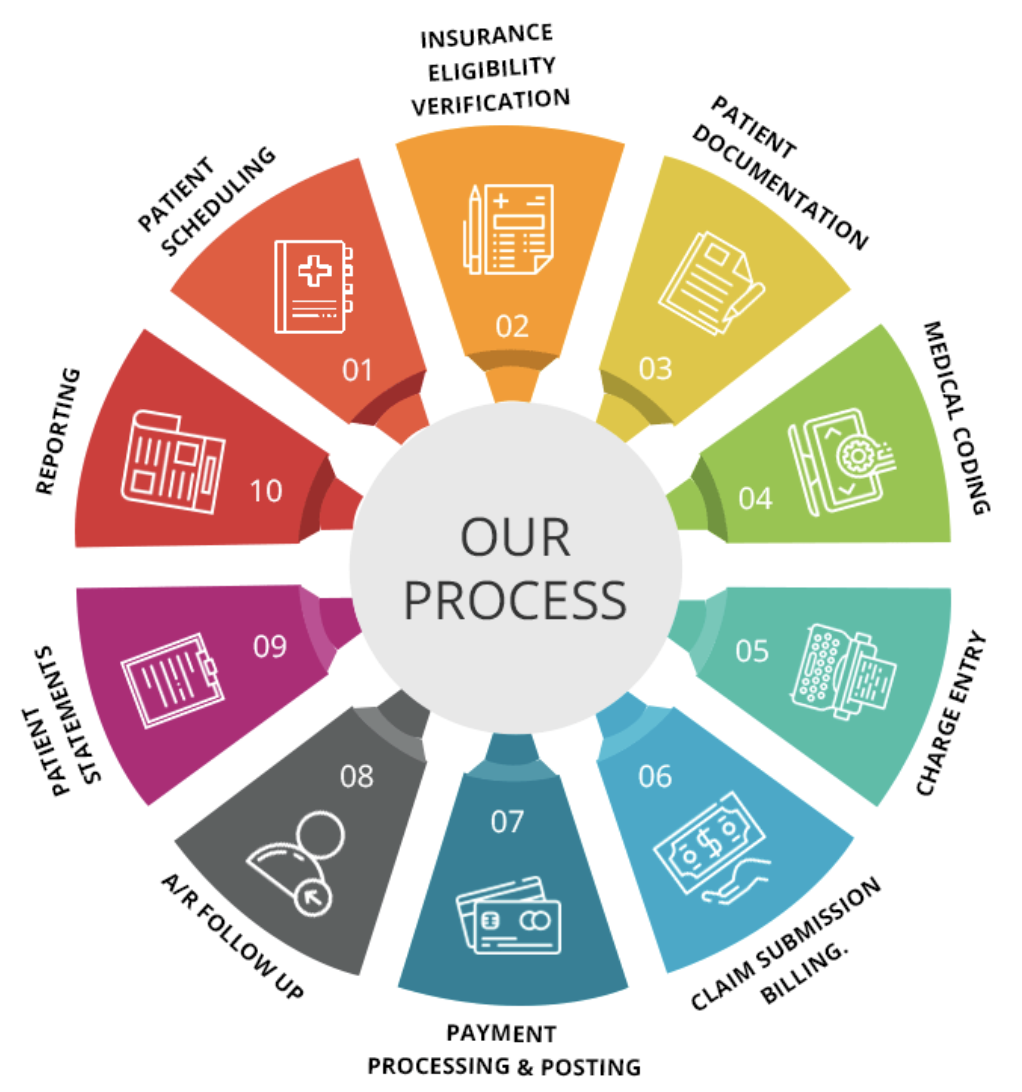
Our full-service medical billing team manages the revenue cycle from eligibility through payment posting and zero balance. Your dedicated team works inside your existing practice management or EHR system instead of forcing you through a disruptive software migration.
Medical Coding
Our certified medical coders review documentation and apply the appropriate coding workflows for your specialty and payer mix. Better coding upstream can prevent avoidable denials downstream.
Denials and AR Recovery
Old accounts are often the fastest place to find recoverable revenue. Our denials and AR recovery service prioritizes aged accounts, identifies denial patterns, works payer responses, and pursues appropriate appeals and follow-up until the account reaches resolution.
Eligibility and Benefits Verification
Eligibility problems can create avoidable write-offs and patient-balance confusion. We verify coverage and benefits so your team has the information needed before claims and patient statements move forward.
Prior Authorization
Authorization requirements vary by payer, plan, service, and specialty. Alaska has no statutory turnaround deadline at all until SB 133 takes effect on January 1, 2027, so we run prior authorization workflows against the payer contract and a dated submission log, which is the only clock that exists here right now.
Patient Billing
Patient balances are part of the revenue cycle too. Our patient billing support keeps statements, balances, and follow-up organized so your practice is not leaving the final portion of earned revenue unattended.
Credentialing
Credentialing problems can delay payments before the first claim is ever submitted. We support provider enrollment and credentialing so practices stay operational with the plans they serve. Alaska sets no statutory deadline for a payer credentialing decision, so we date-stamp every application and chase it on our own schedule.
RCM, CCM and Telehealth
Practices increasingly need billing workflows that account for multiple care models and remote services. We support revenue-cycle processes for RCM, chronic care management, and telehealth programs, with medical virtual assistant support where a practice needs front-office coverage alongside billing.
Dashboards and Automations
You should not need to wait for a monthly spreadsheet to understand what is happening to your revenue. We use reporting and workflow automation to make trends in AR, denials, collections, and billing performance easier to identify and act on.
How Our Medical Billing Process Works
1. Start With a Billing Review
We begin with a 30-minute review of your AR aging, denial patterns, payer mix, and current billing workflow. The goal is simple: identify what is actually costing you money and where we would start.
2. Build the Revenue Recovery Plan
We identify the accounts, payer issues, coding patterns, workflow gaps, and filing risks that deserve attention first. You get a clear view of what should be worked immediately and what needs a process change.
3. Start With the Oldest Money
Working aged AR comes first because it represents revenue you have already earned. Our team works the backlog while establishing a consistent process for new claims and daily billing.
4. Run the Full Cycle
Once the foundation is in place, we take over the agreed portion of the revenue cycle: eligibility, coding, submissions, payment posting, denials, appeals, AR follow-up, patient billing, and reporting.
5. Improve the System, Not Just the Claims
The goal is not to create a permanent cycle of denials and appeals. We look for repeatable patterns so the practice can prevent the same billing problems from occurring again.
Why Alaska Practices Choose Luxen
20+ Years of Revenue Cycle Experience
Medical billing is not a process you learn from a checklist. Payer behavior, documentation, coding, authorization, and follow-up all require experience. Luxen brings more than two decades of experience to the revenue cycle.
Certified Coders
Coding quality affects everything downstream. Our billing operation includes certified coding expertise so claims are built with greater attention to documentation and payer requirements.
Your Existing EHR and Practice Management System
You do not have to replace the software your practice already uses. Luxen works within your existing system, including platforms such as athenahealth, DrChrono, ModMed, AdvancedMD, NextGen, eClinicalWorks, Meditab, OpenDental, and other systems.
A Named Team, Not a Random Support Queue
You should know who is responsible for your claims. Our model is built around dedicated people working inside your systems and learning the way your practice operates.
HIPAA-Compliant Workflows
Before accessing protected health information, we sign a business associate agreement, and healthcare engagements operate through HIPAA-compliant tooling.
AAPC, AHIMA and SOC 2
Luxen combines billing expertise with professional credentials and documented security and compliance standards, including AAPC and AHIMA expertise, HIPAA-compliant workflows, and SOC 2.
We Read the Numbers Before We Quote
We do not want to sell you a generic percentage based on a generic practice. We look at your AR aging, volume, specialty, payer mix, and denial profile first.


Medical Billing in Alaska: Understanding the Payer Landscape
Alaska’s commercial health insurance market is among the most concentrated in the country. On 2024 KFF data the largest carrier holds 94% of the fully insured large group market and 93% of small group. The Herfindahl index sits at 8,789 and 8,629 against a national average near 5,061. Exactly one insurer clears 5% share in either segment. Practices in the Lower 48 negotiate. Alaska practices administer.
Premera Blue Cross is the largest health writer in the state by direct premium, at roughly $1.17 billion in the Division of Insurance’s 2024 annual report. For 2026 the individual marketplace carries two carriers and no more: Premera Blue Cross Blue Shield of Alaska statewide, and Moda Health Plan in Anchorage, the Mat-Su, the Kenai Peninsula, Fairbanks North Star and Southeast. If your front desk is verifying coverage against a national payer list, most of it does not apply here.
Medicare is where Alaska breaks the national script hardest. 118,047 Alaskans were enrolled in 2024. Of those, 3,107 were in a Medicare Advantage plan. That is 2.6%, the lowest rate of any state, against roughly half the country nationally. Ninety-seven percent of your Medicare book here is Original Medicare, and every Part A and Part B claim goes to Noridian Healthcare Solutions, the Jurisdiction F contractor that also covers Arizona, Idaho, Montana, North Dakota, Oregon, South Dakota, Utah, Washington and Wyoming. A vendor selling you Medicare Advantage denial management is selling you a solution to a payer 2.6% of your seniors are enrolled in.
Alaska Medical Assistance, which includes Denali KidCare, covers about 236,000 people and runs fee for service. There are no Medicaid MCOs in Alaska. Managed care accounts for under half a percent of program spending. Claims go to Conduent through the Health Enterprise portal, and there is no plan-by-plan rulebook to learn, which is the one thing here that is simpler than the mainland.
Then there is the payer nobody outside Alaska bills. The Alaska Tribal Health System reaches most of the state, and services received through an IHS or Tribal facility draw 100% federal match under CMS State Health Official letter #16-002, including care delivered by a non-Tribal provider under a written care coordination agreement. Facilities bill the IHS all-inclusive rate, and Alaska carries its own schedule: for services on or after January 1, 2026 the published outpatient rate is $1,222 per visit in Alaska against $826 in the Lower 48, with a Medicare outpatient rate of $1,233 against $733. Alaska also pays for care delivered by community health aides and practitioners certified under the CHAP board, at AS 47.07.069 and 7 AAC 110.620, which is a billable provider category that does not exist anywhere else. If your billing partner has never touched a care coordination agreement, that is a real gap and not a small one.
Alaska Billing Rules That Can Affect Your Revenue
12 months from date of service, Alaska Medical Assistance
Timely filing
30 days to pay or deny a clean claim
Prompt-pay requirement
Alaska Medical Assistance, including Denali KidCare
State Medicaid program
AS 21.36.495 gives an insurer 30 days from receipt to pay or deny a clean claim. Alaska draws no distinction between electronic and paper, which most states do. The insurer also has 30 days to tell you what is defective or what documentation it wants. Once you send it, payment is due in 15 days. Late payment carries interest at 15% a year, waived only where the amount is a dollar or less.
Read subsection (c) closely, because it is the most useful sentence in Alaska insurance law and almost nobody bills against it. If the insurer does not give that notice within 30 days, the claim is presumed clean. The burden flips. A payer that sat silent for five weeks and then denied for a missing attachment has already conceded the claim was complete. That argument only works if someone recorded the receipt date, and receipt dates are the first thing a busy front office stops capturing.
Now the repeal. Alaska’s 80th percentile regulation, 3 AAC 26.110(d), required carriers to pay out-of-network providers no less than the 80th percentile of billed charges for the area. It was adopted out of existence on June 20, 2023, filed on July 17, and took effect January 1, 2024. No replacement floor was written. Carriers instead agreed voluntarily to hold in-network rates through 2025 and now file their out-of-network methodology with the Division of Insurance. For an Alaska practice this rewrites the arithmetic of staying out of network, in a state where a 2011 Milliman study for the Alaska Health Care Commission put commercial physician payment at 169% of the five-state regional average. Air ambulance is a separate case entirely: the federal No Surprises Act governs it, and because of the Airline Deregulation Act no state law can set that rate at all.
Alaska Medical Assistance wants the initial claim inside 12 months of the date of service under 7 AAC 145.005(c). Where the department grants retroactive eligibility, you get 12 months from the date it mails the notice. Miss the window and relief runs through the 7 AAC 105.280 appeal, which is decided on good cause, meaning circumstances outside your control. Forgetting is not good cause. A second level appeal is due within 60 days.
Workers’ compensation is where Alaska quietly destroys revenue. Under AS 23.30.097(h), a provider is paid only if the employer receives the bill within 180 days of the later of the date of service or the date the provider learned the treatment related to a work injury. Not a year. Not two. A hundred and eighty days, and after that the bill is simply not payable. The employer then owes payment within 30 days of receiving the bill or the AS 23.30.095(c) report, whichever comes later. The physician schedule is RBRVS-based and the current fee schedule took effect April 1, 2026. Any occupational medicine or orthopedic practice in Alaska should be running a 180-day aging report separate from everything else, and most are not.
Prior authorization is the one place where the rule you need is not here yet. SB 133 became law on July 15, 2025 and takes effect January 1, 2027. It sets 72 hours for a routine determination and 24 hours for an expedited one, adds extended authorizations for chronic conditions, a step therapy exception process, and a secure electronic submission portal. Until that date Alaska has no statutory turnaround at all, so the only pressure you can apply comes from the payer contract and a dated submission log. Alaska also has no statutory credentialing deadline in either direction, which is why provider enrollment here has to be chased rather than waited on.
Alaska Medical Practices We Serve
We bill for emergency medicine, anesthesiology, radiology, pathology and hospitalist groups, where the 80th percentile repeal changed what an out-of-network claim is worth and the federal No Surprises Act now supplies the arithmetic that state regulation used to.
We bill for air ambulance, ground transport and medevac operators, where documentation of medical necessity, mileage and signature drives the whole claim, and where the Airline Deregulation Act keeps air transport outside any state rate setting.
We bill for orthopedics, occupational medicine, physical therapy and pain management, where the 180-day workers’ compensation submission deadline in AS 23.30.097(h) is short enough to kill a bill before anyone notices it aged.
We bill for primary care, family medicine, pediatrics and behavioral health serving rural and Tribal communities, where the same encounter can route to Alaska Medical Assistance fee for service, an IHS all-inclusive rate, or a care coordination agreement, depending on where the patient was seen.
We bill for internal medicine, cardiology, oncology and geriatrics, where 97% of the Medicare book is Original Medicare through Noridian and the denial patterns look nothing like the Medicare Advantage playbook most vendors bring with them.
Serving Major Alaska Markets
Luxen supports these markets remotely, inside the software your practice already uses.
Anchorage
Juneau
Fairbanks
Wasilla
Sitka
Ketchikan
Kenai
Bethel
Anchorage holds 289,350 of Alaska’s 737,088 residents. Juneau and Fairbanks sit near 31,000 each, and the next six communities on the list are all under 10,000. That distribution is the billing problem in one line. State transportation planning puts 82% of Alaska communities off the road network, so a Bethel or Ketchikan practice draws from a catchment reachable only by air, with rotating and locum clinicians, and provider records that go stale faster than the claims can clear.
We run the same model in other states, with the payer rules, filing windows and Medicaid structure rebuilt for each one. See Washington medical billing, Arizona medical billing, Utah medical billing, Colorado medical billing, California medical billing, Texas medical billing, Florida medical billing, New York medical billing, Illinois medical billing, Ohio medical billing, Georgia medical billing, Virginia medical billing, Maryland medical billing, Massachusetts medical billing, Connecticut medical billing, Vermont medical billing, Maine medical billing, Pennsylvania medical billing, Delaware medical billing, Michigan medical billing, Minnesota medical billing, North Carolina medical billing, Tennessee medical billing, Alabama medical billing, New Jersey medical billing, Rhode Island medical billing, Oklahoma medical billing, Missouri medical billing, Montana medical billing, South Carolina medical billing, Wyoming medical billing, Oregon medical billing, Kentucky medical billing, South Dakota medical billing, Wisconsin medical billing, Mississippi medical billing, Nevada medical billing, Nebraska medical billing, North Dakota medical billing, New Mexico medical billing, West Virginia medical billing, and Kansas medical billing, or start from the full list of medical billing companies and what each one charges.
What Alaska Practices Say About Working With Luxen
“We rely on rotating and locum clinicians to keep our rural locations covered, but their claims were frequently held because provider records were outdated or incomplete. Luxen centralized our provider roster and reduced provider-related claim holds from $91,000 to $14,000 in four months.”
Executive Director, Multi-Location Rural Health Practice, Interior Alaska
“Our transport claims could sit for more than a week while billing waited for mileage, signatures, or medical-necessity documentation. Luxen introduced a pre-bill review that reduced average submission time from nine days to two and released $76,500 in previously held claims.”
Operations Manager, Air Ambulance Provider, Anchorage, Alaska
More engagements are written up in our ambulance billing case study and our dental practice case study.
What Does Medical Billing Cost in Alaska?
3% to 6% of collections
Luxen's pricing generally falls between 3% and 6% of collections, depending on claim volume, specialty, payer mix, and how much of the revenue cycle your practice hands over.
Larger-volume practices can generally access the lower end of the range because billing economics improve as claim volume increases. A smaller or more complex practice may fall toward the higher end because the amount of work per account is greater.
For comparison, published billing-industry pricing guides commonly place percentage-based medical billing somewhere around the mid-single digits, with higher ranges for smaller or more complex practices.
The more important question, however, is not whether a billing company charges 3%, 4%, 5%, or 6%.
It is what happens to collections after you hire them.
A lower fee attached to weak billing is still expensive.
The Risks of Outsourcing Your Medical Billing
Outsourcing is not automatically the right choice for every practice.
A billing company is a poor fit if you are unwilling to share operational visibility, if the vendor uses a rotating pool of people who do not learn your practice, or if the company cannot explain why your claims are being denied.
There is also a real risk in choosing a vendor that promises aggressive collection improvements without understanding your payer mix and specialty.
That is why Luxen starts with the numbers.
You should see the AR aging. You should understand your major denial categories. You should know what is being worked. And you should know what your billing company believes is realistically recoverable.
The right outsourcing relationship should make your revenue cycle more visible, not less.
How Much Revenue Are You Missing?
Look at your AR aging.
- How much is sitting past 90 days?
- How much is past 120 days?
- Which payers represent the largest outstanding balances?
- What are your top five denial reasons?
- How many claims are repeatedly resubmitted without a clear resolution?
- How much patient responsibility remains uncollected?
- How many claims are approaching a filing deadline?
Those numbers tell a story.
Send us your AR aging and we will tell you where we would start.
A Message From the Luxen Founder
I started Luxen because medical practices should not have to choose between doing great clinical work and running a financially healthy business.
Billing is too important to be treated as an afterthought. When claims are submitted incorrectly, denials sit untouched, or aged AR is ignored, the practice feels it everywhere, from cash flow and payroll to staffing decisions and growth.
Our job is to bring discipline to that part of the business.
We work inside the systems practices already use, build accountable billing workflows, and focus on the revenue that is actually recoverable.
We believe your billing partner should know your numbers, your specialty, your payers, and your practice, not just your account number.
Shivam Pujara
Founder, Luxen Talent (& Madhupa)
More on how we built the Luxen billing team.
.avif)
Transparent, U.S.-Focused Billing Support
Your Practice Keeps Its Systems
You do not need to switch EHR or practice management software to work with Luxen.
Your Data Stays Protected
Luxen healthcare engagements use HIPAA-compliant workflows, and we execute a business associate agreement before accessing protected health information.
Your Team Knows Who Owns the Work
We use a dedicated team model so responsibility does not disappear into a generic support queue.
You Can Start With Aged AR
Many practices begin with their old AR before moving into the daily revenue cycle. That gives both sides the opportunity to demonstrate results before expanding the engagement.
Alaska Medical Billing FAQs
Why outsource medical billing in Alaska?
Alaska changed underneath its providers and most billing processes did not change with it. The 80th percentile out-of-network regulation was repealed effective January 1, 2024 with nothing put in its place. Workers’ compensation bills stop being payable at 180 days under AS 23.30.097(h). Prior authorization gets statutory deadlines on January 1, 2027 and not before. Each of those is a date, not a dashboard, and someone has to be watching them claim by claim.
Do you work with Alaska Medical Assistance and Denali KidCare?
Yes. Alaska runs Medicaid fee for service with no managed care organizations, so claims go to Conduent through the Health Enterprise portal instead of to a roster of plans. Initial claims are due within 12 months of the date of service under 7 AAC 145.005, or within 12 months of a retroactive eligibility notice. We also handle billing for services delivered through IHS and Tribal facilities, including care coordination agreements and community health aide encounters.
How do you handle denied claims?
We work every denial to resolution, then find the pattern behind it, which is usually a short list of causes repeating. In Alaska one of those causes is worth arguing instead of correcting. AS 21.36.495 requires an insurer to state a deficiency within 30 days of receiving a claim, and if it does not, the claim is presumed clean. A late denial for missing documentation is often a payment argument, not a resubmission.
Is this cost-effective for a small Alaska practice?
Our fee runs 3% to 6% of collections. Alaska pays well above its neighboring states per physician service and roughly 13% of residents under 65 are uninsured, so a single mishandled claim here costs more than it would anywhere else. The recoverable money in a small Alaska practice is usually the workers’ compensation bill that passed 180 days, the out-of-network claim still being priced against a repealed regulation, and the 15% annual interest on payments the insurer made late.
Book a Billing Review
You do not need another sales presentation.
Bring your AR aging, your denial data, and the questions you already have about your billing operation.
In a 30-minute Billing Review, we will look at where your revenue is sitting, where claims are breaking down, what we would prioritize first, and what outsourcing would cost based on your practice.
Send us your AR aging. We will tell you what we believe is recoverable.
